Precision wafer scribing and breaking for ultra-hard substrates
Project snapshot
Client:
Location:
Sector:
Product type:
Challenge
Increase wafer size capability while maintaining precision and cleanliness
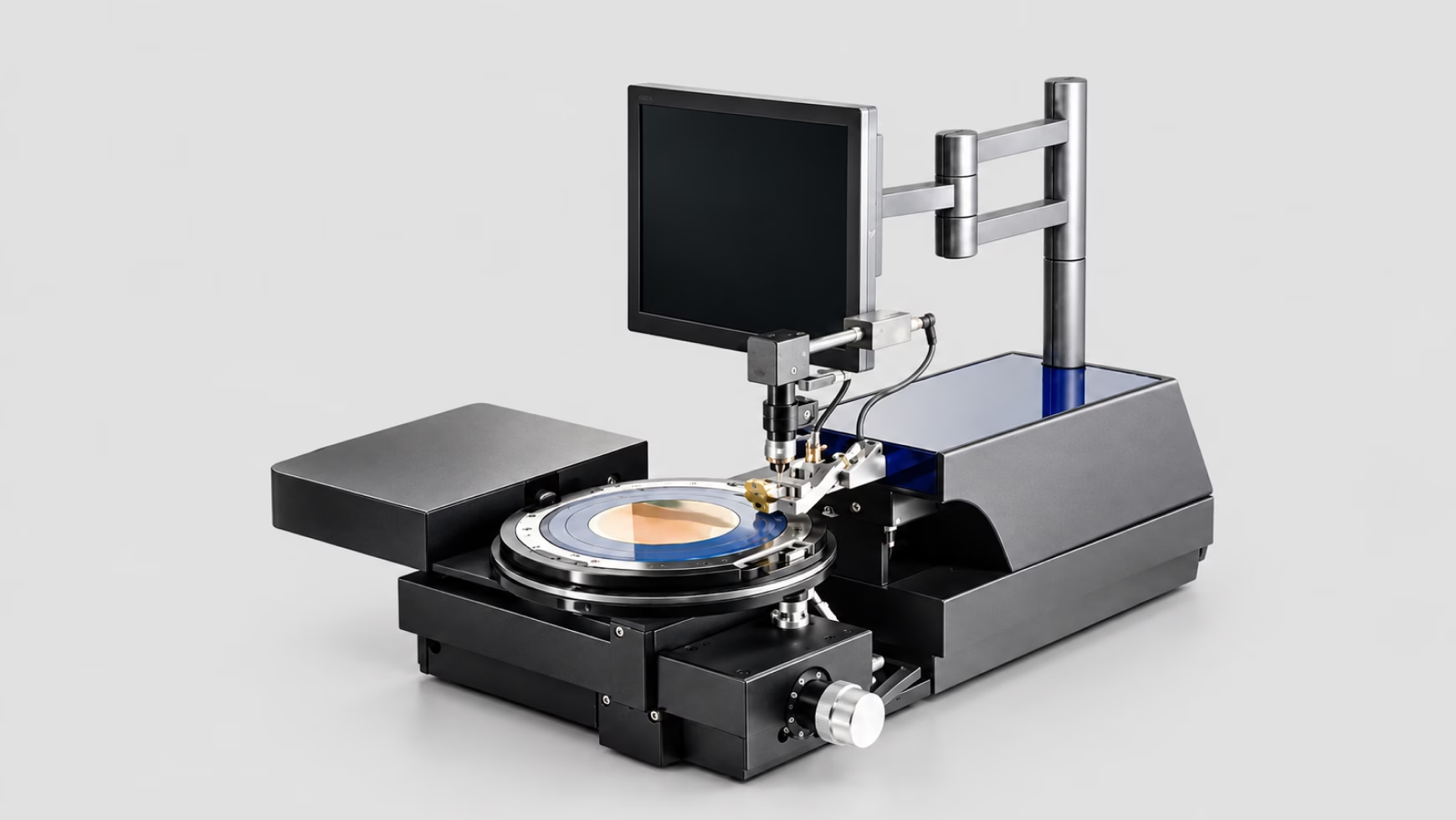
A pioneer in manual wafer scribing and dicing needed to scale their process from 4″ to 8″ wafers. Their unique approach required the wafer to “float” so that scribing could be accurate and breakage clean, while keeping the tool compact and visually updated. The design also had to allow for future automated wafer loading. Traditional diamond saws and lasers dominate wafer dicing, and industry-standard fixturing posed constraints on adapting a scribing process to meet factory requirements. The wafer staging needed to align precisely to the scribe axes while supporting effortless movement during the scribing action.
Innovation
Custom scribing tool engineered for precision, reliability, and small footprint
We collaborated closely with the customer to develop a concept that met their key requirements for performance, reliability, and industrial design. Key elements of the solution included:
- Wafer staging system that supports the wafer while allowing nearly effortless floating motion during scribing.
- Precise alignment to scribe axes to ensure clean, repeatable breaks.
- Tool footprint minimized to meet factory space constraints.
- Industrial design updates to modernize appearance while maintaining functionality.
- Designed for extensibility to future automated wafer loading.
Result
Fast-tracked development enabled early process evaluation
AIR delivered a wafer scribe and break tool that met the customer’s precision, cleanliness, and footprint goals. The system was completed on a fast-track schedule, allowing the customer to begin early process reviews and further development of their ultra-hard wafer scribing techniques.
Featured capabilities:
Featured sectors:
Case studies
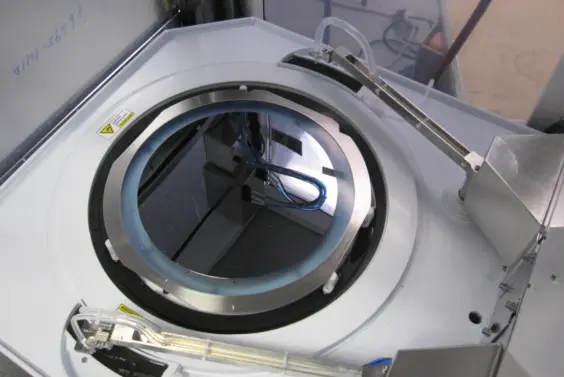
A tier 1 semiconductor OEM needed a custom solution for precise spin coating, cleaning and drying of a special liquid on a wafer mounted on a film frame to enable a downstream process. There were no off-the-shelf…
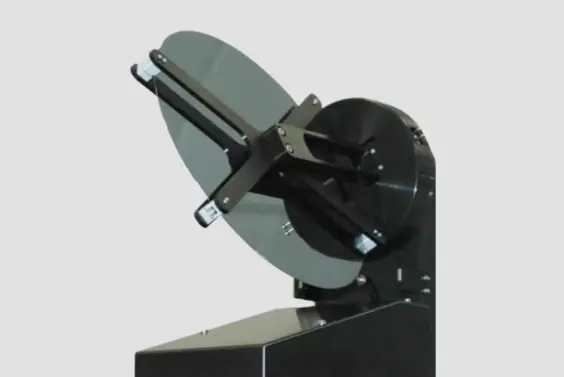
Backside contamination inspection and other process advancements require wafers to be loaded into process or inspection chambers in a 90° or 180° flipped orientation. Adding a wrist to a robot can meet…
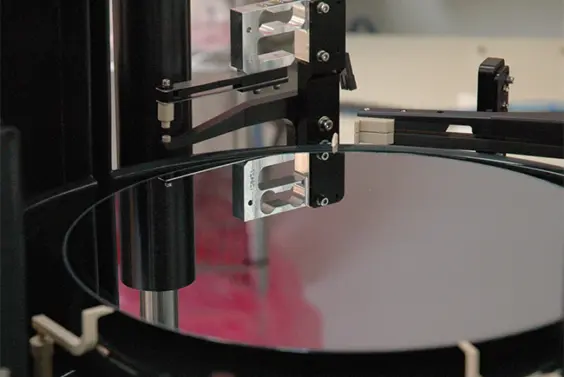
The OEM needed to implement multiple bonding technologies into a small-footprint, wet environment platform. Wafer cleaning, drying, alignment, and joining mechanisms had to be robust, non-particle generating,…