Robotic tending cells built on 35 years of automation expertise, designed for the precision demands of MedTech
Repetitive loading, unloading, inspection, and processing tasks are among the most common sources of inefficiency and variability in manufacturing. AIR’s robotic tending cell solutions put proven automation at the heart of these processes — increasing throughput, improving quality, and reducing the risk of error. Built on a highly customisable off-the-shelf platform and developed from over 35 years of MedTech automation experience, our tending cells integrate seamlessly with existing process equipment and can be configured to meet the specific demands of your production environment.
Capabilities
Advanced robotic tending cells for precise, repeatable, and highly flexible manufacturing automation
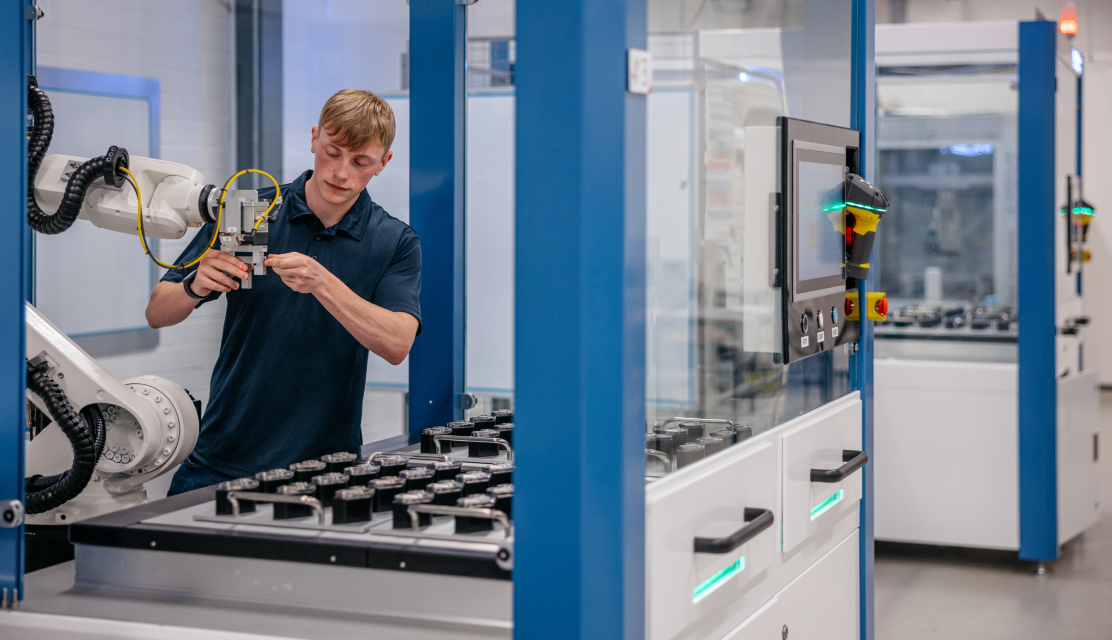
Our tending cell solutions are designed to automate repetitive production tasks with precision and reliability. Built around a proven core platform, each cell can be rapidly configured across a wide range of payload, reach, gripper, and loading format options — without the time and cost of a full bespoke redesign.
- Automated loading, unloading, inspection, and processing across repetitive production tasks
- Highly customisable platform covering payload, reach, gripper type, and end-of-arm tooling
- Payload options from 4kg to 8kg, with reach configurations from 1,420mm to 1,840mm
- Gripper options including 2-jaw, 3-jaw, vacuum, and other formats on request
- Multiple loading formats including drawers as standard, with conveyors and AIV formats available
- 1-up or 2-up end-of-arm tooling configurations for increased pick efficiency
- Physical or virtual safety perimeter guarding options
- Product tracking, status monitoring, and batch traceability as standard
- MES platform and database integration for full production visibility
- CE marked with Cat3/PLd safety system as standard
- Low energy consumption with no pneumatics on the standard platform
- Cells designed to be reconfigured and redeployed to other applications in the future
Approach
A collaborative, application-focused approach developed from deep MedTech sector knowledge
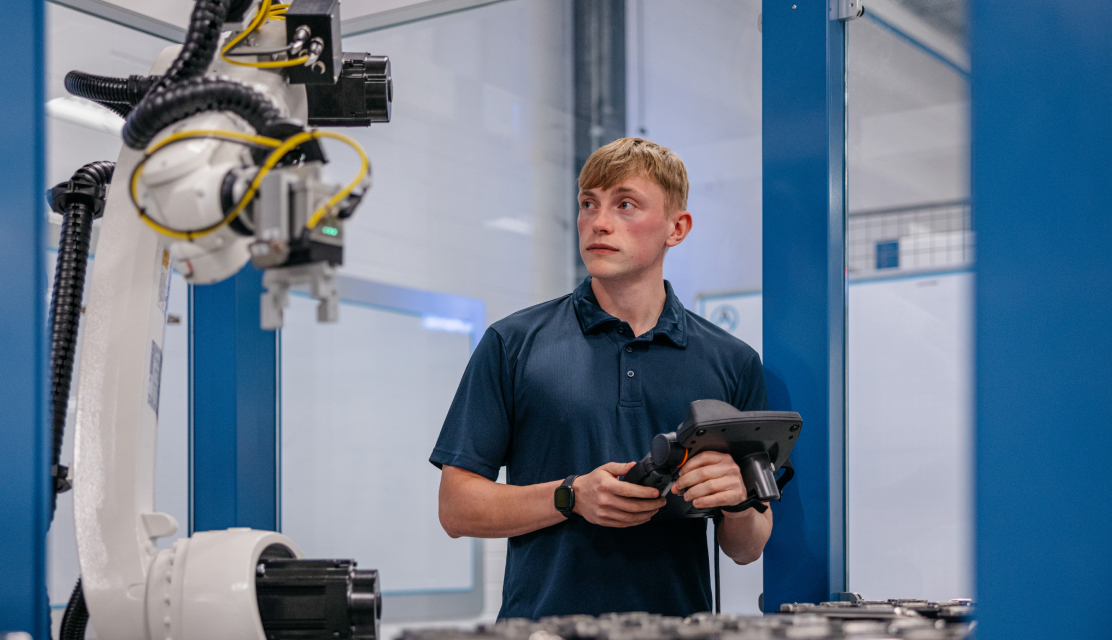
We work closely with customers to understand their production process, regulatory environment, and automation requirements before any system is specified. Our multi-disciplined engineering team has the capability and sector knowledge to work alongside the world’s most advanced MedTech manufacturers, from initial concept through to commissioning and ongoing support.
- Early engagement to understand production tasks, cycle requirements, and integration constraints
- Rapid configuration of our proven tending cell platform to match your specific requirements
- Integration with PLC or PC-controlled process equipment across a wide range of applications
- Development of custom process cells where standard configurations do not meet specific needs
- Full project delivery including design, build, testing, installation, and commissioning
- Intuitive user interface design for straightforward, accurate day-to-day operation
- Ongoing after-sales support to maintain consistent performance and uptime
Impact
Greater throughput, improved quality, and more efficient manufacturing across repetitive production tasks
Replacing manual tending with proven robotic automation delivers measurable improvements in production efficiency, product quality, and operational consistency — particularly in regulated MedTech environments where precision and traceability are critical.
- Increased throughput through consistent, continuous automated operation
- Reduced operating costs by removing manual resource from repetitive tending tasks
- Improved product quality and reduced risk of handling error
- Full product traceability by type, status, and batch, with precise processing timestamps
- Seamless integration with MES platforms and manufacturing databases for real-time production visibility
- Flexible, future-ready systems that can be reconfigured and redeployed as production needs evolve
- Reliable operation in regulated MedTech environments with CE-marked, Cat3/PLD safety systems as standard
Case studies
Manual handling of polysilicon rods caused yield loss due to breakage and contamination. Rod diameters varied widely and spacing was tight, creating a mechanical challenge. The manufacturing environment…
Interoperability—running any manufacturer’s FOUP without adjustment—was not being met by current load ports. MTBF targets of 2+ years, compliance with emerging factory automation standards, and tight…
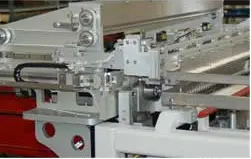
PV cell efficiency testing is critical for both manufacturing process control and downstream panel assembly. The customer needed to automate flash-based I-V testing without compromising strict industry…