Stacked UV LED curing module for inkjet OLED films on mobile phone displays
Project snapshot
Client:
Location:
Sector:
Product type:
Challenge
Meet a six-month deadline for prototype OLED production
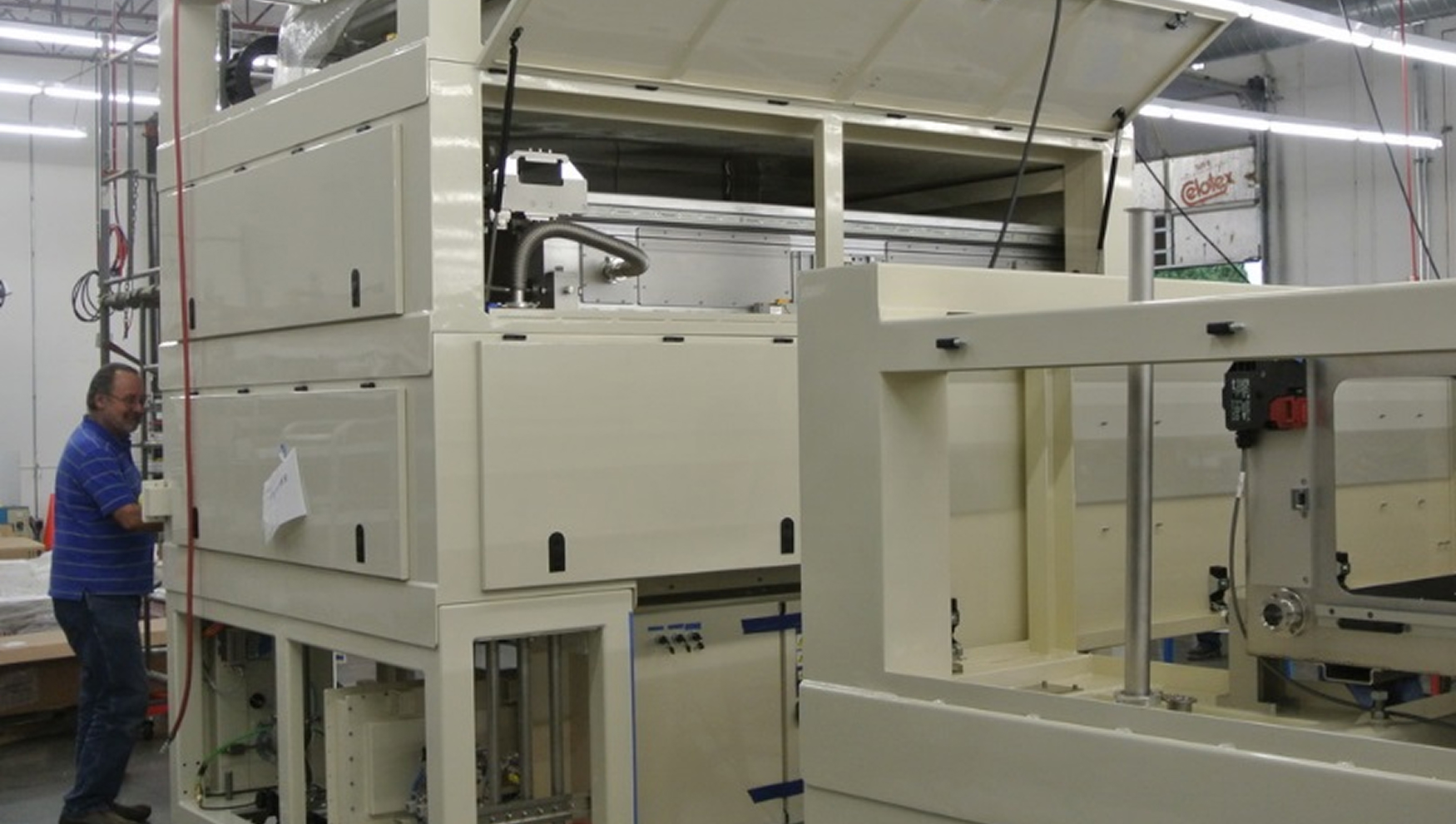
A start-up OEM needed to deliver flexible OLED prototype equipment using a new inkjet printing process for a major display manufacturer in just six months. While the company had deep expertise in inkjet printing, it lacked the engineering and manufacturing capacity to design and build the required UV curing module.
Without an external partner, the project risked missing the critical move-in date, delaying factory commissioning and jeopardizing the customer’s production ramp.
Innovation
Fast-tracked design and manufacture of a scalable UV curing solution
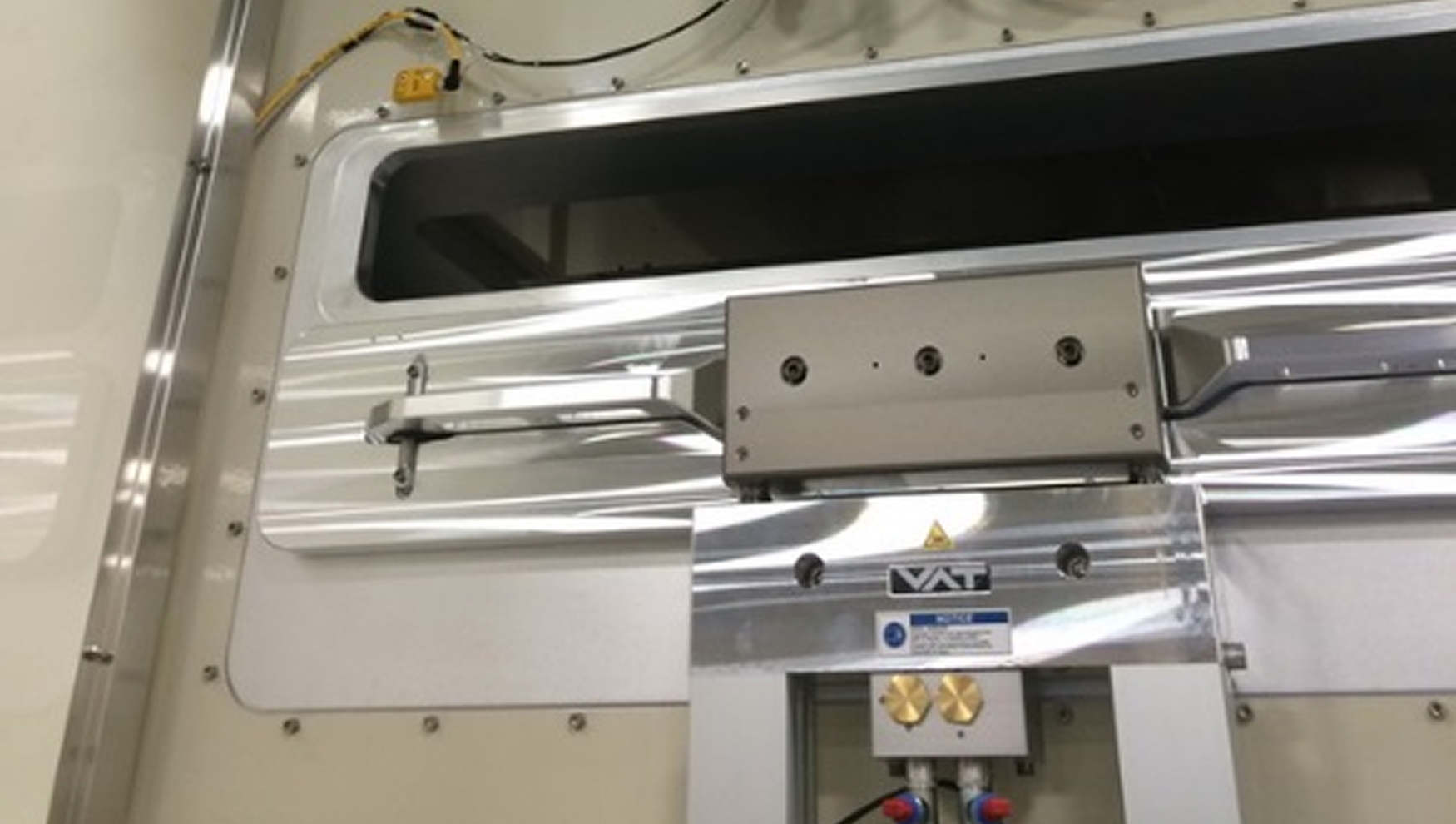
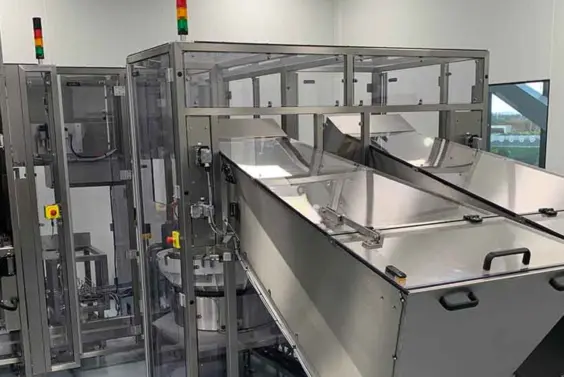
AIR converted a high-level concept into a factory-ready UV curing module that met strict footprint, performance, and delivery requirements.
This involved:
- Handling <0.5mm thick glass, 925mm x 1500mm (1/2G6).
- Particle-free processing in pure Nitrogen ambient.
- Designing triple-stacked UV curing modules to maximize output within the available factory space.
- Engineering a fully production-ready system aligned with customer factory standards and process requirements.
- Rapidly scaling manufacturing to deliver more than 50 UV modules comprising over 150 stacked curing chambers.
Meeting aggressive shipment and installation deadlines to support on-time factory startup, with first-of-kind units used for full high-volume manufacturing.
Result
On-time delivery unlocked large-scale adoption of flexible OLED displays
The UV curing modules were delivered on schedule, enabling the opening of a $4B display factory whose funding depended on achieving volume manufacturing. This final process step helped accelerate the commercialisation of flexible OLED technology, now used in hundreds of millions of high-end mobile devices worldwide.
Customer Comment
“AIR has gotten me out of several binds over the years…
Our ability to ship them on time changed the industry and enabled flexible OLEDs for mobile phones to dominate the market.”
– Senior VP of Engineering
Featured capabilities:
Featured sectors:
Case studies
The conversation among manufacturers has moved on from, “should we automate?” to “how do we automate?” Darragh de Stonndún, CEO of Automated Industrial Robotics, says there’s a right and a wrong…
You might have heard of build-to-print manufacturing. Here’s a comprehensive guide on what it is, when to use it, and how it differs from build to spec.
An innovative single-line platform to significantly reduce time-to-market for new medicines