Why industrial automation projects fail, and how to avoid the pitfalls
The conversation among manufacturers has moved on from, “should we automate?” to “how do we automate?” Darragh de Stonndún, CEO of Automated Industrial Robotics, says there’s a right and a wrong way to approach these projects. And there’s a high cost in getting it wrong. Here’s how to ensure success.
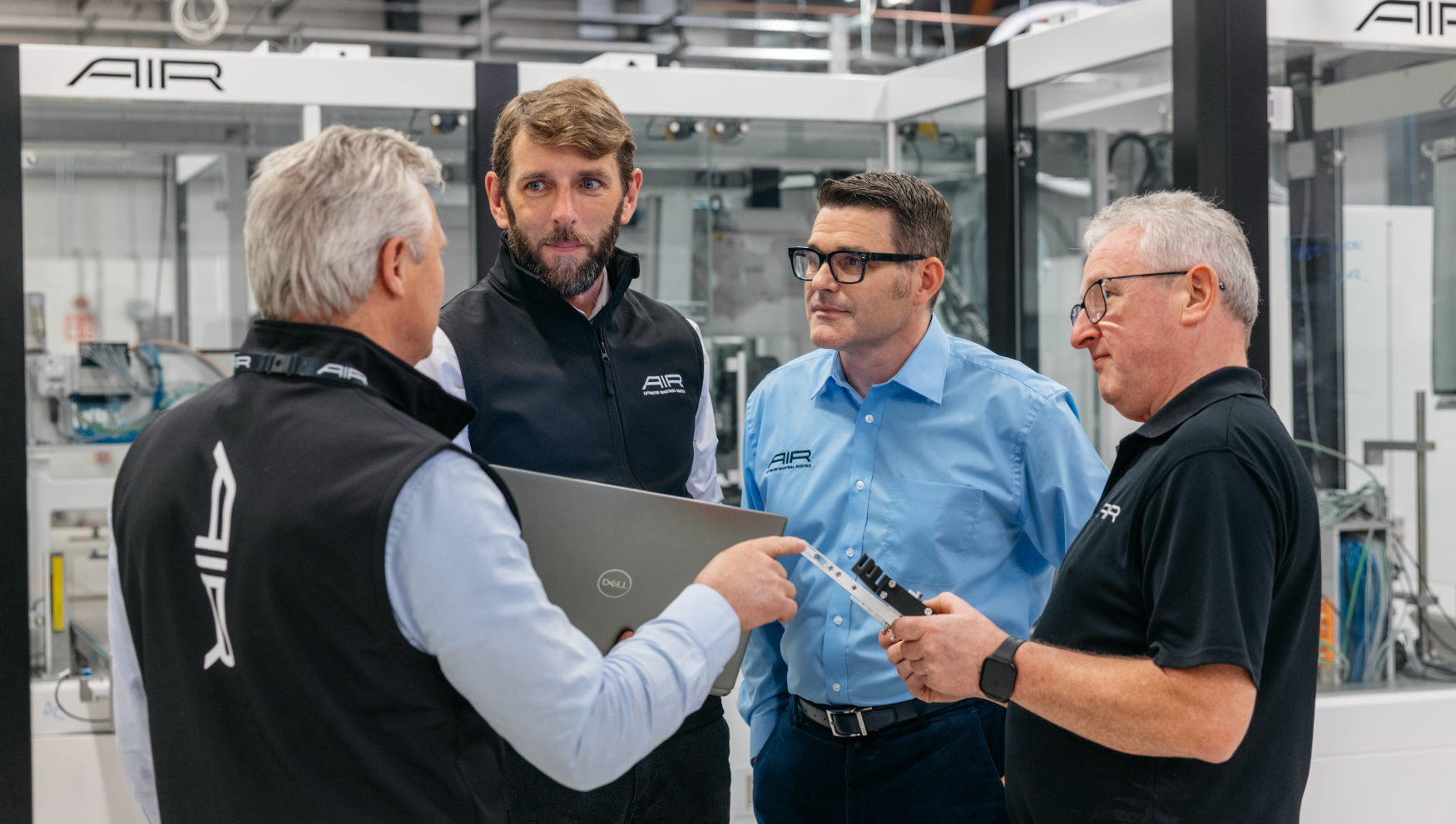
I’ve been working in manufacturing for over 20 years — from shop floor to project management to quality control to management. Most recently, I’ve had the privileged position to be working on the ground with manufacturers, helping them navigate the new world of industrial automation.
What I see is that the theoretical discussions are over. Most manufacturers are now starting to actually automate their processes.
There are clear advantages of automating industrial processes in terms of improving quality, consistency and speed. Possibly the biggest driver for automation now, is that it enables manufacturers to scale to meet growing demands in the fastest, most efficient way.
And, in a time where the US in particular is looking to ‘reshore’ manufacturing, and skilled labor is hard to find, automation is proving to be the best (really the only) way to do this viably.
The hard truth is that although robotics and automation can transform a firm’s capacity and quality, too many automation projects fail. Failed projects like this can cripple companies, but it’s unnecessary. It’s something we at AIR are working hard to prevent.
I’ve shared some of the top mistakes I see manufacturers make so you don’t have to make them too.
Limited initial scope and problem identification
Automation projects don’t fail because servomotors and PLCs stop working. They fail because the system wasn’t designed for the real environment it was going into.
Almost every automation failure I’ve encountered traces back to one of two things: scope and integration. Both of which are strategic oversights from leadership.
Generally, the scope wasn’t defined tightly enough at the front end — so the system we built didn’t match the problem we were trying to solve for.
Defining the right problem, in detail, is the right place to start. Time spent up front doing this will be more than worth it in the long run.
Poor integration with current processes
Integration often isn’t considered deeply enough, and it’s critical for smooth automation.
You need to think about integrating every aspect of your system — into upstream and downstream processes, ERP, MES, and facilities infrastructure.
In most failures I’ve seen, either integration was underestimated or it was addressed too late.
Skipping the groundwork
Too often, manufacturers rush in too fast — going from concept to build without working through design and development properly. They don’t take each of these decisions seriously enough.
Then, when it comes to the commissioning of the machines, the problems start to arise. And fixing them becomes more expensive.
When you’ve paid attention to the details from the outset, the problems become less and less. That’s why at AIR, we have a seven-phase project delivery lifecycle process (PDLC) that makes sure no step is overlooked. No matter how small a detail, we put the same amount of hard work into it.
I understand the urgency and the wish to be competitive and innovative and first-to-market. But skipping the rigor of the beginning phase can cost far more than it’s worth later on down the line.
Choosing point solutions instead of full automation
Sometimes, we get companies that want point solutions. They have to solve a bottleneck, and they need to do it fast.
However, the constraints of that becomes apparent quickly. Customers have learned that isolated automation cells without coherent systems architecture create their own inefficiencies and problems.
The question then usually becomes: how do I integrate this point solution into our full system? It’s possible of course, but you get a better, and more cost-effective solution if you automate everything at once.
But the overall trend is towards full automation. The manufacturers investing most aggressively right now are thinking about lines and factories, not individual assembly cells. That’s what we’re seeing.
Innovating for today, not tomorrow
What’s innovative now will be standard in a couple of years. Failures happen when manufacturers take a short-term view — neglecting to learn what technologies are coming. Their systems may be cutting-edge when deployed, but will ultimately struggle to keep up with new technology and be unable to scale with demand.
Here are three key developments you should be ready for:
1. Data as king
Data today is everything. Manufacturing systems in the past were reliant on people knowing the system really well. We used to frame it like a car: ‘Let it warm up before you drive it.’ Humans would check oil levels, tolerances, and take time to let the machine find its groove before producing.
This is no longer the case. Data is informing us on how to run and get the most out of our machines: straight away, with no warming up period. Any automation project now needs to be set up to collect and use data.
2. Validation ready automation
Highly regulated industries like pharmaceuticals and medical devices are seeing that the regulatory bar has moved in terms of automated processes. It’s shifted from “build a piece of automation that makes sure the product is right,” to “make sure the product is validation ready.”
These kind of companies will need systems that are GMP-ready and CFR, Part 11 compliant [US FDA regulation for electronic records/signatures], and have electrical batch records and audit trails.
These are now being asked for from day one — not bolted on at the end as before.
3. Product customization
You may have heard of ‘Lot size 1’ manufacturing — where one-of-a-kind units can be produced at speed and scale, without costly changeovers. This is revolutionizing manufacturing, and it’s becoming increasingly necessary as consumers become more fixated on, and used to, having products personalized to them.
With customers wanting more flexibility, we’re fast moving away from producing the same inkjet cartridge over and over again. This step change is going to need significant automation innovation and industry 4.0 thinking to make this happen — using the latest advances in robotics and vision, like servo motors vs traditional cam-driven motors.
Of course, AI is a huge consideration too. It’s already here in some ways but it still has a way to go — particularly in solving the last 20% of manufacturing. I’ve written about AI and industrial automation here.
Focusing too much on headcount
Automation isn’t, and should never be, driven by a sole goal of replacing people. Meaningful employment is central to a healthy society, and the expertise you’ve built over years should be retained and valued — even if it may be redirected.
The big risk of a labor-reduction mindset is that that you end up designing your systems to solve the wrong problem.
The way we approach it is: we aim to make a manufacturing facility more efficient so it can scale with the same amount of people.
The result is fewer rejects, higher speeds, and greater quality and consistency. Automation enables all of those. That of course brings ROI, but the ROI isn’t as directly a headcount issue as many companies think.
It’s also a mistake to think that any system can be fully autonomous. Some jobs are seeing more demand, and commanding large salaries — for example people who can diagnose PLCs, interpret vision systems data, or troubleshoot a robotic issue.
The jobs that may disappear are the ones nobody wanted to keep anyway. They’re repetitive, physically demanding, even unsafe. They can also be impossible for manufacturers to recruit for.
To sum up: ensuring successful industrial automation projects
Successful automation projects don’t happen by accident. They’re the result of a disciplined, detailed process, from the very first conversation all the way through to the final signature on the project closeout.
Every stage must be enforced with the same rigor and attention to detail. Every assumption must be validated before spending any money, cutting steel, procuring products, or seeking customer approval. The engineering team, quality team, operational leadership, everyone, must be aligned before the next phase of the project starts.
The time you invest in the early stages of an automation project will save you many sleepless nights in the years to come. Not to mention significant amounts of money, and perhaps even your company’s future.
Our global automation specialists can help you address the challenges of process automation. Talk to us.

Related news & insights
You might have heard of build-to-print manufacturing. Here’s a comprehensive guide on what it is, when to use it, and how it differs from build to spec.
An innovative single-line platform to significantly reduce time-to-market for new medicines

A Proven Approach for Semiconductor OEM Equipment Development