What to Look For in Pet Treat Cutting Automation
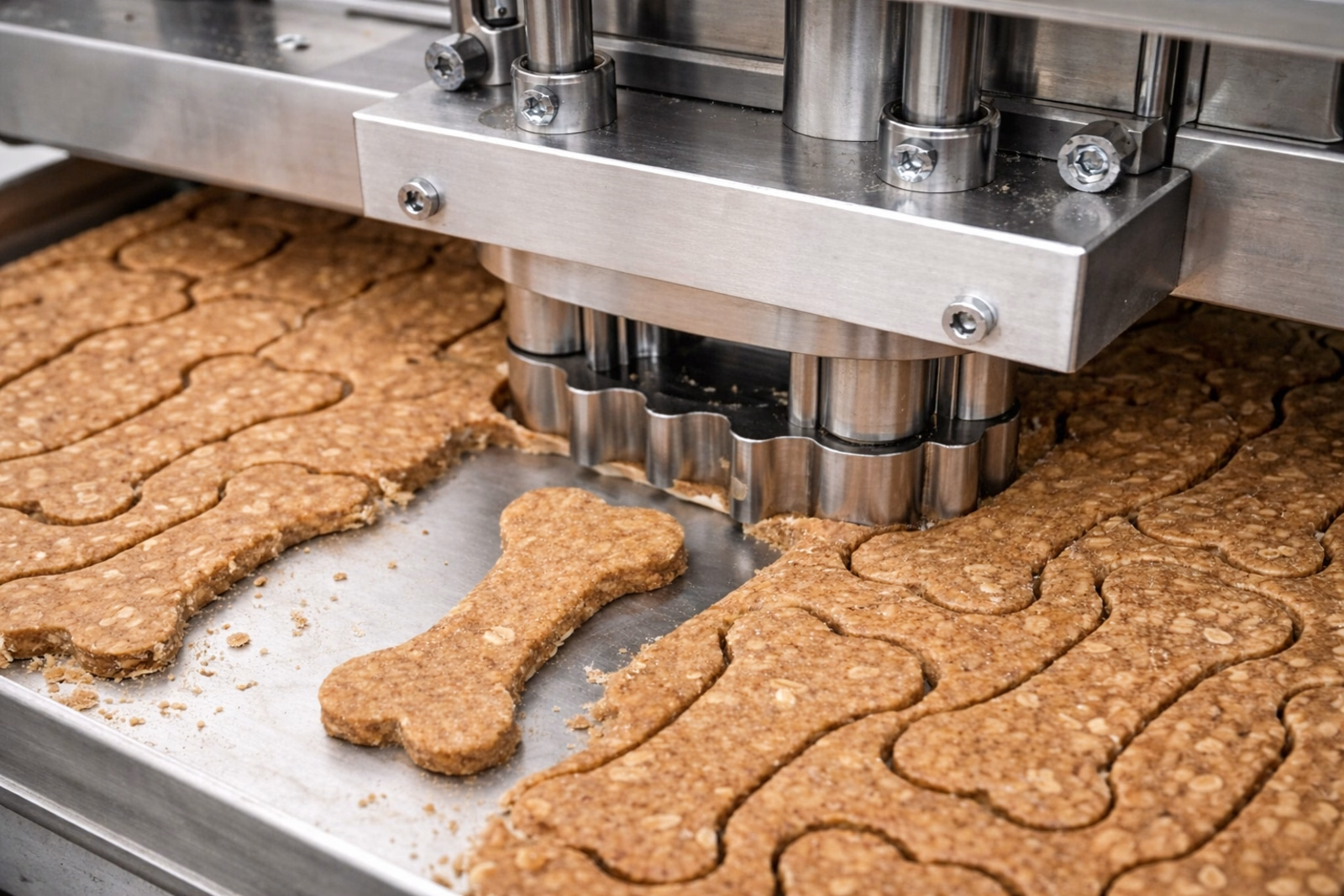
Pet treat cutting automation needs to be precise and repeatable so the customer receives a consistent product every single time. It needs to be hygienic and reduce the amount of waste produced while maintaining a high throughput to enhance productivity.
In an age where the goalposts are forever moving due to sustainability targets and a push for innovative niche products, automation is becoming essential. Pet ownership remains widespread across the UK, with 62% of households owning at least one of the country’s estimated 36.5 million pets in 2026. For pet food manufacturers, meeting this substantial customer demand requires a production process that can combine throughput with consistently high quality.
The right solution needs to be more than simply making sure the product is cut correctly. This article explores what manufacturers need to look for when searching for a solution that meets modern-day demands.
Why Pet Treat Cutting Needs to be Optimised
Inconsistent cuts can result in treats that fall outside of the required length and weight specifications. This either increases the amount of rejected products or results in product giveaway. Poorly cut edges can also lead to crumbs and fines. In more serious situations, crumbs and fines can build up around the equipment and cause unplanned stoppages.
All of the aspects listed above will lead to different problems for the manufacturer. Ultimately, it will slow down the production process and increase waste. This leads to higher, unnecessary costs and poor sustainability outcomes.
The best way to optimise the pet treat cutting process is to introduce automation. So, what should manufacturers look for when specifying an automated pet treat cutting system?
Repeatable Fixed-Length Cutting
Consistency needs to be a top priority when looking for pet treat cutting automation. The appearance of pet treats can make a huge difference when it comes to customer satisfaction and retention. Inconsistency in shape and size can damage trust in the brand. Automated cutting machines can produce the same product consistently with clean edges and uniform sizes.
Consider How the Product Reaches the Blade
Manufacturers need to consider the product’s entire journey into and through the cutting station. Products need to arrive in a controlled position and remain supported during the cut. The exact solution depends on the materials within the pet treat and the product’s characteristics.
For example, a firm dental chew will act differently to a softer or more flexible meat-based product. Automation needs to be designed around the product characteristics.
Automation, designed by AIR, uses servo control to regulate the speed of the cutting process. This high-precision technology controls the acceleration and velocity of a motor by using feedback mechanisms. Precise real-time adjustments can be made to ensure the system operates consistently regardless of load and resistance.
This means that every cut can achieve the same level of precision because fluctuations in the speed of the cutting process are eliminated. This has several benefits for manufacturers and brands, including results that drive customer satisfaction. Other benefits include less waste, less dependence on manual intervention, and less product giveaway.
Select the Right Cutting Technology for the Product
Pet treat cutting automation doesn’t just use one cutting method that works for every product. AIR has a range of options for pet treats. Choosing the right option depends on the texture of the product, its consistency, the production speed and the finish required. Blade options include:
- Rotary Blade Cutting: Useful for high-speed lines where repeatable lengths are required, but manufacturers will still need to consider how the product behaves when it meets the blade.
- Guillotine and Static Blade Cutting: Useful when a clean cut is required for tougher textures. It’s ideal for denser chews.
- Ultrasonic Cutting: This method uses high-frequency vibrations to reduce friction. This is ideal for sticky or soft materials in products like jerky.
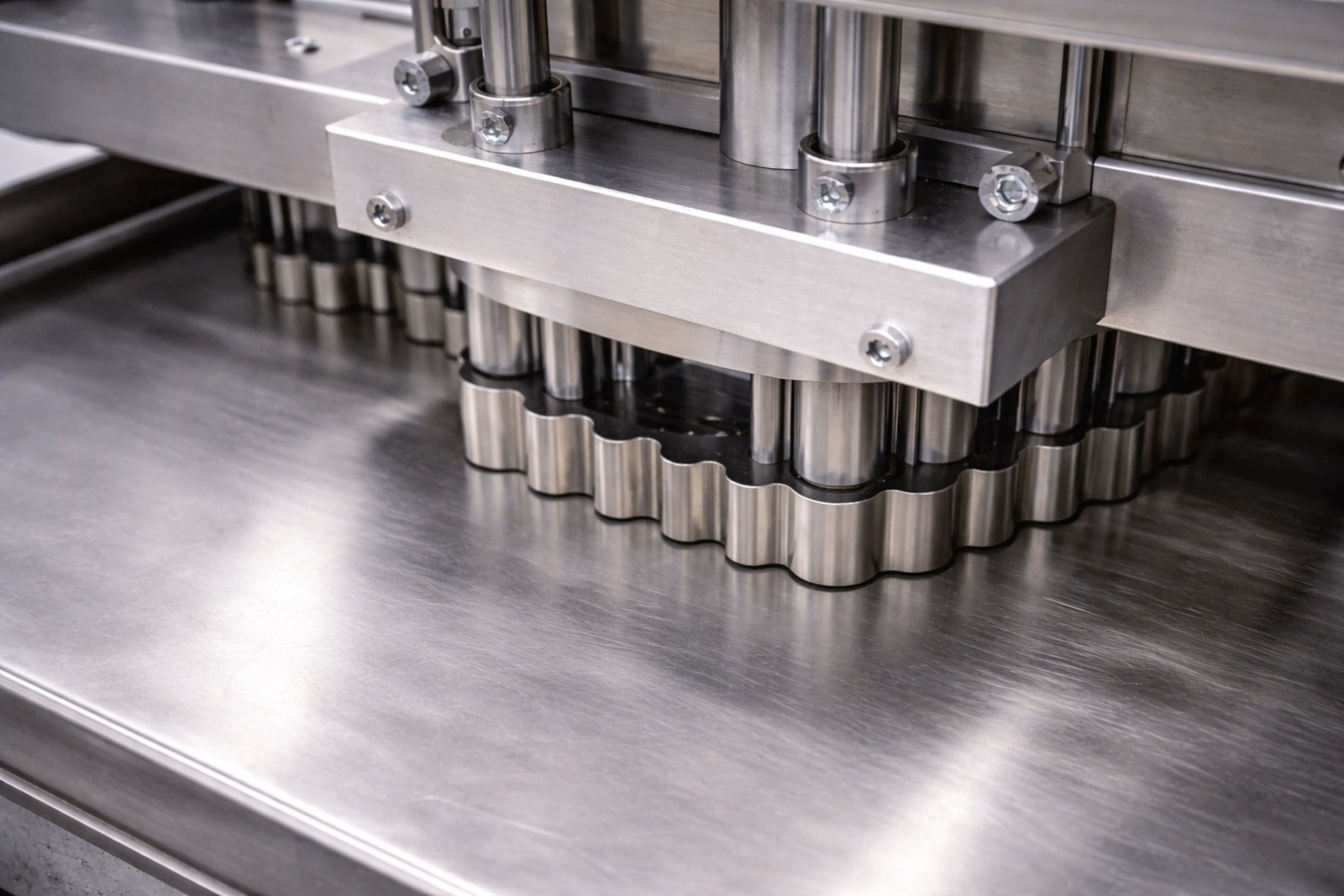
Check How Quickly Blades and Cutting Tools Can Be Changed
All equipment will eventually require some maintenance. Blades will naturally wear as they age. A blunt blade may create poorer edges that cause the overall quality of the product to decline.
When considering automation, manufacturers need to think about whether operators can access and change the blade safely. It’s important to think about how much downtime will be needed to make the change, and whether or not it’s easy to return to the old settings. AIR designs its cutting systems with blades that are easy to remove and provides spare cutting components through its after-sales support.
Make Sure the Cutting Station Works with the Rest of the Line
A high-performance cutting machine will not deliver its full potential if it doesn’t work with the rest of the line. The upstream process needs to deliver product at the required rate, while downstream handling and packaging equipment needs to process the pet treats without creating a bottleneck. AIR has a line-wide approach when adding new automation to an existing factory.
AIR demonstrated this approach when installing an end-of-line solution for Pets Choice; AIR had to integrate the system into the company’s existing architecture.
Finding the Best Pet Treat Cutting Automation
The best pet treat cutting isn’t always about having the fastest blade or the highest throughput. Manufacturers need a solution that can produce the required cut repeatedly and effectively. More importantly, the solution has to work as part of the complete manufacturing process.
The aim is to create reliable automation that enables the business to perform better. Speak to the team at AIR to discuss how pet treat cutting automation could improve your process today.

Related news & insights
The conversation among manufacturers has moved on from, “should we automate?” to “how do we automate?” Darragh de Stonndún, CEO of Automated Industrial Robotics, says there’s a right and a wrong...
You might have heard of build-to-print manufacturing. Here’s a comprehensive guide on what it is, when to use it, and how it differs from build to spec.
An innovative single-line platform to significantly reduce time-to-market for new medicines