What is Thermoforming in the Medical Sector?
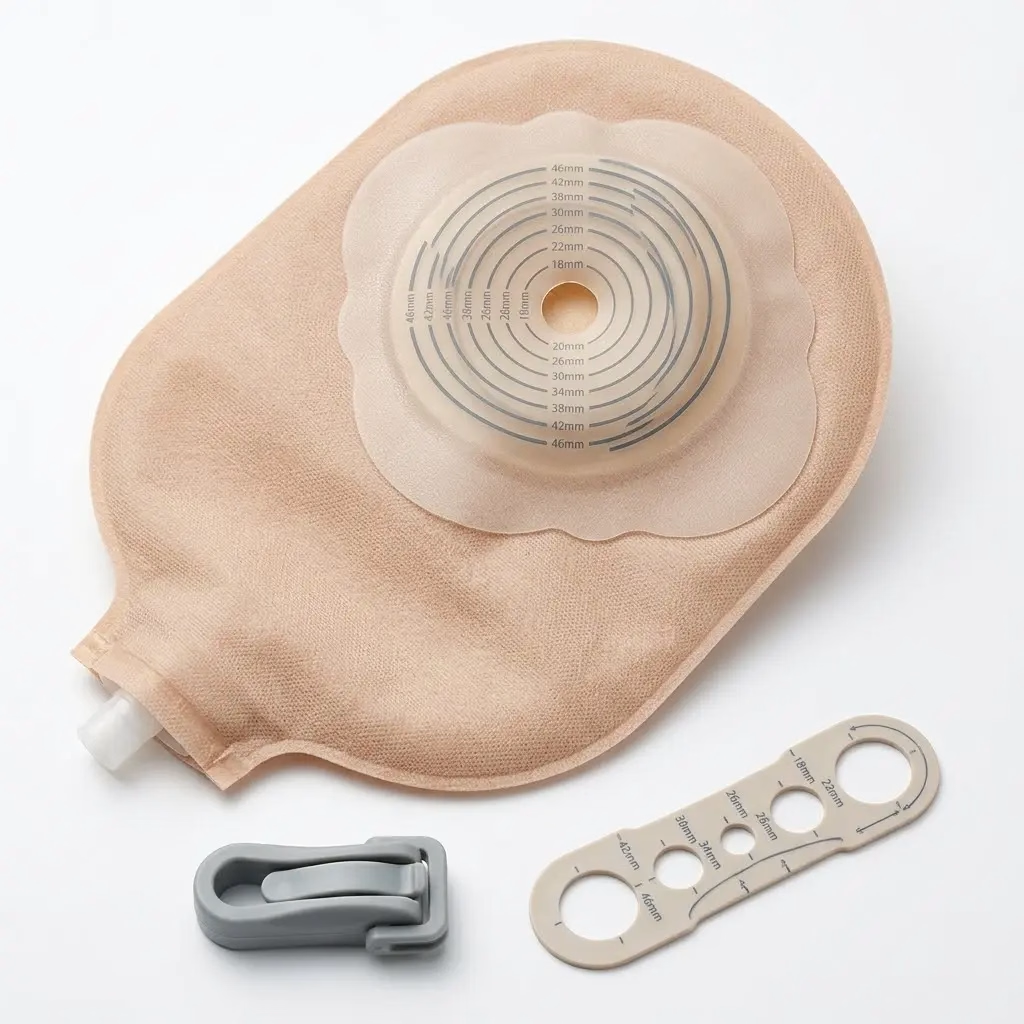
Thermoforming is a manufacturing process in which a thermoplastic sheet is heated until pliable, formed over or into a mould, and cooled so that it retains the required shape. The formed material is then trimmed to create the finished component. In the medical sector, thermoforming can be used to produce packaging, equipment housings and components for products such as ostomy appliances. The process can be integrated with automated feeding, cutting, inspection and product-handling equipment to provide a consistent and efficient production system. This guide explains how thermoforming works, the machinery involved and its role within automated medical-device production.
What Does Thermoforming Mean?
Thermoforming involves heating a thermoplastic sheet to its appropriate forming temperature. At this point, the material becomes flexible enough to take the shape of a mould without being heated beyond its suitable processing range.
The softened sheet is formed using vacuum, air pressure, mechanical assistance or a combination of these methods.
Vacuum forming removes the air between the sheet and the mould, allowing atmospheric pressure to draw the material against the mould surface. Pressure forming uses compressed air to apply greater force, which can help produce sharper details. For deeper or more complex parts, a plug assist can be used to control how the material stretches.
Thermoforming can be highly automated. Material feeding, heating, forming, trimming and product handling can all be incorporated into a coordinated production line.
How Does the Thermoforming Process Work?
The precise configuration of a thermoforming system depends on the material, sheet thickness, component design and required production rate. However, the process generally includes five main stages.
1. Feeding the Thermoplastic
Thermoplastic material can be supplied as individual sheets or on a continuous roll.
Roll-fed systems are commonly used for high-volume, thin-gauge products such as trays and blister packaging. Sheet-fed equipment is often used for thicker materials and larger components, including equipment covers and housings.
Accurate feeding is essential because the sheet must enter the heating and forming stations in the correct position. Automated feeding systems help maintain consistent alignment throughout production.
2. Heating the Plastic
The sheet moves into a heating station, where controlled heat softens the material.
Different thermoplastics have different forming-temperature ranges. The required heating conditions also depend on the sheet thickness and component design. Industrial thermoforming machines may therefore use multiple heating zones to control the temperature across different areas of the sheet.
Accurate temperature control helps prevent uneven forming, excessive thinning and other quality problems.
3. Forming the Shape
Once pliable, the sheet moves into the forming station and is drawn or pressed against the mould.
The forming method depends on the component’s shape, depth and level of detail:
- Vacuum forming removes the air between the material and the mould.
- Pressure forming uses compressed air to press the sheet against the mould with greater force.
- Plug-assisted forming uses a mechanical plug to guide the material before vacuum or pressure is applied.
A system may combine these methods when producing deeper or more complex components.
4. Cooling the Component
The formed material is cooled while it remains against the mould. This allows the plastic to become rigid and helps the component retain its intended dimensions when removed.
Cooling conditions must be carefully controlled. Removing the part too early can lead to distortion, while inefficient cooling can extend the production cycle unnecessarily.
5. Trimming and Finishing
After forming, excess material remains around the component. This material must be removed to create the required final shape.
Some thermoforming systems perform forming and cutting within the same production cycle. Other systems transfer the formed sheet to a separate trimming station.
Automated equipment can also incorporate stacking, inspection and downstream product handling. Once separated and checked, the finished component is ready for assembly, packaging or further processing.
What Is a Thermoforming Machine?
A thermoforming machine is the equipment used to heat a thermoplastic sheet and form it into a defined shape. Depending on the application, it may also perform feeding, cooling, trimming, stacking and component handling.
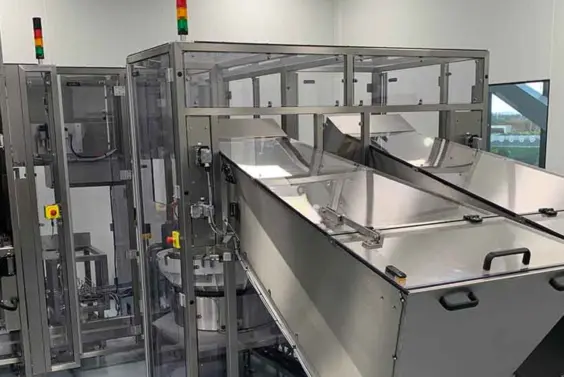
In medical manufacturing, a thermoforming machine may operate as part of a larger automated production system rather than as an isolated piece of equipment.
Its configuration will depend on the product being manufactured. For example, a machine producing components for an ostomy appliance will have different material-handling, forming and quality-control requirements from one producing medical blister packs or equipment housings.
Where Is Medical Thermoforming Used?
Thermoforming can be used across a range of medical products and applications, including:
- Sterile barrier trays
- Blister packaging
- Procedure and component trays
- Diagnostic-equipment housings
- Protective covers and enclosures
- Components used in ostomy appliances
- Packaging used to hold medical devices securely during transport and storage
One potential application is the production of shaped thermoplastic components for ostomy products. These components may form part of an appliance designed to collect bodily waste securely and comfortably.
Consistency is particularly important in this type of manufacturing. Components must be accurately formed so that the different parts of the appliance fit together and function as intended.
Medical thermoforming may also require close control over material specifications, cleanliness, traceability and inspection. The applicable requirements will depend on the product, its intended use and whether it comes into contact with the patient or forms part of a sterile barrier system.
Thermoforming Within an Automated Production Line
For many manufacturers, thermoforming is only one stage in a wider production process. Effective integration is therefore essential.
Automated product-handling systems can maintain the correct position and orientation of components as they move between forming, cutting, inspection and assembly equipment. Inspection systems can verify characteristics such as component presence, dimensions, alignment and surface quality.
Downstream automation can then prepare finished products for packing, storage and distribution.
Sewtec Automation designs and manufactures bespoke automation and product-handling systems for manufacturers across a range of industries. Its approach considers the complete production process, helping individual machines and automation modules work together as one coordinated system.
Support With IQ, OQ and PQ Validation
Sewtec Automation can support manufacturers with Installation Qualification, Operational Qualification and Performance Qualification activities for automated equipment.
Installation Qualification
Installation Qualification, or IQ, confirms that equipment has been installed correctly and in accordance with the agreed specification.
This can include checks covering:
- Equipment components
- Utilities and connections
- Technical documentation
- Calibration requirements
- Software and control-system installation
- Safety features
Operational Qualification
Operational Qualification, or OQ, verifies that the equipment operates as intended throughout its specified operating range.
Testing may cover:
- Machine functions
- Controls and user interfaces
- Alarms and interlocks
- Safety systems
- Operating parameters
- Defined upper and lower process limits
The purpose is to demonstrate that the system performs correctly under predetermined operating conditions.
Performance Qualification
Performance Qualification, or PQ, demonstrates that the equipment and overall process can perform consistently under routine production conditions.
PQ activities can provide confidence that the system is capable of repeatedly producing the required result when operated by trained personnel using approved materials and procedures.
The precise scope of IQ, OQ and PQ support should be agreed at the beginning of the project so that responsibilities, documentation and acceptance criteria are clearly defined.
Integrating Thermoforming Into Your Production Process
Understanding thermoforming is only the starting point. Manufacturers must also consider material handling, cycle times, inspection, traceability, trimming, assembly and downstream packaging.
Sewtec Automation invents, designs, manufactures, installs and supports bespoke automation solutions for manufacturing and packaging operations worldwide. Whether you want to automate an individual process or integrate thermoforming equipment into a wider production line, the system can be developed around your product and operational requirements.
Speak to the AIR team to discuss medical thermoforming and production-line integration.
Related news & insights
The conversation among manufacturers has moved on from, “should we automate?” to “how do we automate?” Darragh de Stonndún, CEO of Automated Industrial Robotics, says there’s a right and a wrong...
You might have heard of build-to-print manufacturing. Here’s a comprehensive guide on what it is, when to use it, and how it differs from build to spec.
An innovative single-line platform to significantly reduce time-to-market for new medicines