The Secret to Ensuring Success with Collaborative Development Programs

Many advanced technology OEM startups and companies needing custom factory automation turn to a partner to co-develop mission critical programs. Like many outsourcing practices, this comes with its own set of challenges especially when doing so for the first time.
Development managers and engineers often worry that their development partner will fail to deliver a competent design on schedule and horror stories abound about designs falling short of expectations causing delays and added cost. Fortunately, there is a secret to executing successful design collaborations to reduce project risk: engage your partner early, before finalizing the product spec.
Why Engage with a Development Partner So Early?
Once you’ve selected the right partner, it is critical to determine how to effectively work with them and adapt your processes to enhance collaboration. Choosing the wrong partner or using a flawed process often results in having to start over with another partner or taking over the project yourself, both of which lead to schedule delays and cost overruns. Learning how to work with your development partner will help prevent timeline problems, missed expectations, and high levels of frustration.
It takes time for people to understand each other and to develop the trust needed for a successful outcome. Most companies need to modify their internal development processes to efficiently collaborate with an external partner. Finding and making these adjustments early will help your program run more smoothly.
A simple way to improve your success during these initial steps, while simultaneously advancing the state of your program, is to engage your development partner in the specification and concept stage. This may seem premature, as you may not know exactly what you want to do yet, but it’s the best time to get to know your partner. Companies often make the mistake of waiting for fully completed specifications before starting to collaborate. A good partner will help you develop a specification and improve product quality, develop new innovations, and meet demanding launch schedules – especially if you adhere to the best practices below.
5 Early Development Partner Engagement Best Practices
1. Tackle Problems Early
You will quickly discover if you’ve chosen the right partner by working on the actual problem in the beginning. By seeing how their development team works, reviewing the early deliverables, listening to the type of questions they ask, and gauging responsiveness, you will learn whether they will be a good fit for your project.
Until you begin the actual work, you will have a difficult time discerning sales fluff from substance. Building early confidence will make a measurable difference in how smoothly the rest of the program goes.
2. Integrate the Development Teams
Integrating the two development teams is one of the most important steps you can take to ensure a successful program. It takes time to learn each other’s strengths and weaknesses, and fill gaps in the combined team.
Frequently, you’re looking for a development partner to bring knowledge you may not have yourself. Developing the detailed concept together quickly confirms that they have the knowledge needed with the depth required.
It will also take some time for the engineers to become comfortable with each other, and to trust and respect each other’s perspectives. Creating effective communication at the engineering level is extremely important to a fast-paced program.
3. Harness New Ideas
A good development partner can generate many new ideas. It’s far easier to consider these ideas during the formative specification and concept stages instead of trying to change a concept you’re already invested in.
Considering new ideas from outside the organization can be a delicate process. There will be a lot of pointed questions from team members seeking to understand all aspects of the idea. This process will be more effective and more likely to be truly collaborative if these ideas are introduced before a concept has solidified and when there is trust between the teams.
4. Advance the Design While Forming the Relationship
Engaging early enables you to make progress on the design while the relationship is forming. Working together to develop the specification and the concept will produce hard design deliverables with understanding and buy-in from both teams.
The specification and concept phase will typically last four to six weeks (depending on project complexity) for most capital equipment designs. At the end of this phase, you will have the following:
- Conceptual mechanical solid models
- Written specifications
- System electrical and fluid schematics
- Software architecture
- Major component selection
- A preliminary bill of material
- Product costing
- Development schedule
Accomplishing programs with cost, budget and schedule constraints will require trade-offs. Collaborating on these deliverables with your development partner achieves buy-in, commitment and a much richer understanding of the problem than simply handing them a specification. They will be much farther up the learning curve and have a deeper appreciation of the reasons behind the specifications.
5. Assess Internal Processes Early
Finally, it’s important to get an early assessment of your internal processes so you can modify them if needed to optimize collaborative development. This isn’t typically considered in the beginning but gaining an early understanding of how processes will need to change will simplify and accelerate project execution.
For example, answering the following questions up front will simplify the final phases of the development:
- How will supporting documentation such as manuals, spares, service and training be handled?
- What are the project interfaces and format requirements for the support departments?
- What kind of manufacturing data will be needed, and at what stages?
Reduce Project Risk & Accelerate Outcomes
Early engagement in the collaborative design process improves project performance and accelerates development programs. Working with your development partner during the specification and concept phase is an effective way to reduce project risk while advancing the state of your program.
If you’d like to expand your design, engineering and manufacturing resources while minimizing your development risk, speak with the Owens Design team. For the past 40 years, OEMs and manufacturers seeking factory automation have relied on Owens Design as an extension of their engineering and manufacturing teams to deliver innovative solutions in record time.
Contact us to learn more about custom automation solutions
Related news & insights
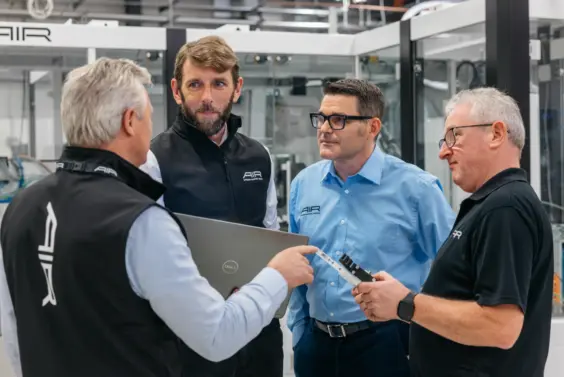
The conversation among manufacturers has moved on from, “should we automate?” to “how do we automate?” Darragh de Stonndún, CEO of Automated Industrial Robotics, says there’s a right and a wrong...
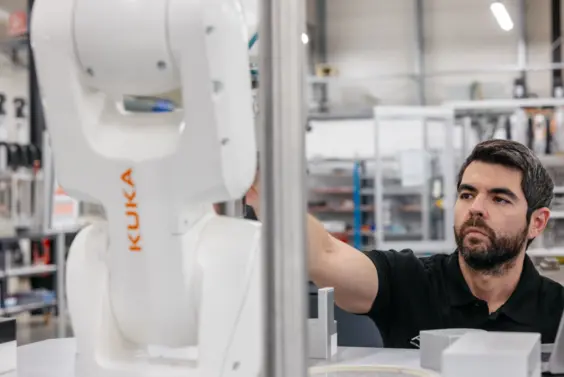
You might have heard of build-to-print manufacturing. Here’s a comprehensive guide on what it is, when to use it, and how it differs from build to spec.
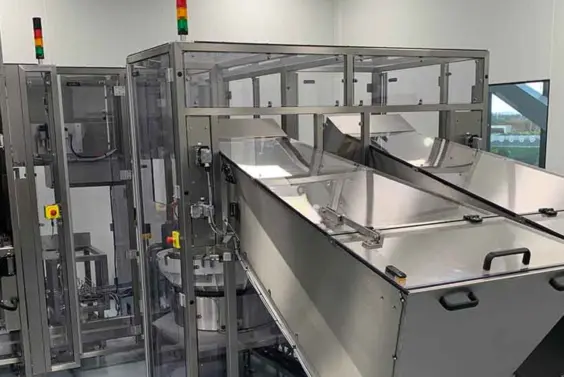
An innovative single-line platform to significantly reduce time-to-market for new medicines