Pros and Cons of Contract Manufacturing
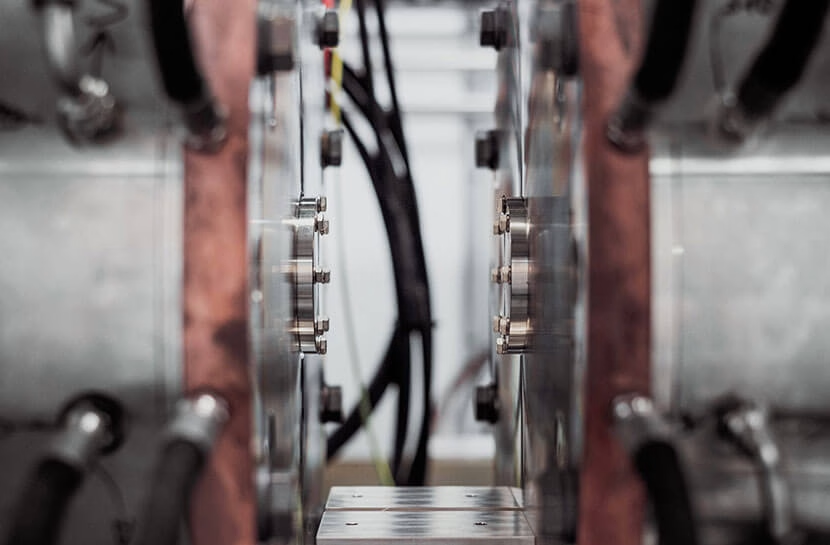
Contract manufacturing is by far the most-used form of manufacturing utilized by companies across the globe in need of outsourced manufacturing services. Contract manufacturing is utilized by companies from Apple to Tesla to scale their production to levels that would be otherwise impossible in-house.
As with any operational model, contract manufacturing has significant pros as well as cons. By completely outsourcing manufacturing services, you can save crucial funds, but you’ll also be giving away a large portion of control in the manufacturing process.
Here we’ll introduce you to what exactly this operational model is and valuable contract manufacturing pros and cons:
What Is Contract Manufacturing & Why Is It Important?
Contract manufacturing makes product manufacturing possible to companies that lack a full-service, in-house development team. Contract manufacturing involves outsourcing a product’s manufacturing process to a trusted manufacturer.
Engineers from the company seeking service will provide complete drawings and documentation and the CM will then manufacture the product from start to finish therefore taking the production burden off of companies.
Contract manufacturing is a vital component of the manufacturing industry. CMs make it possible for companies and start-ups with limited resources to manufacture products. In addition to that, they provide specialized, technical manufacturing insight an in-house team cannot.
Overall, CMs create more opportunities all-around for emerging technologies.
Advantages of Contract Manufacturing
Contract manufacturing is a crucial tool for small business and entrepreneurial start-ups looking to make their product the next big emerging technology. Here are a few more advantages CMs provide:
With a CM, you can save on costs significantly. By outsourcing your product manufacture, you will not have to dedicate valuable in-house resources to manufacturing. Working with a CM eliminates the need to juggle between vendors and helps you avoid running into unexpected costs. You’ll overall reduce labor costs significantly.
By knowing exactly what your manufacturing process will cost you ahead of time, you can practice better budget control throughout the entire product life cycle.
Contract manufacturers also provide businesses with technical insight found nowhere else. Since CMs build products for a versatile selection of companies, they have valuable in-depth knowledge into product build for various niches.
CMs also have the knowledge to spot potential risks and flaws within the design early on. This can prevent fatal mistakes within a product that could cost you significant funds in the long run.
Since a contract manufacturer will completely take on your manufacturing process, you’ll create more opportunities within your company.
When you choose to outsource the manufacturing process, you’ll free up time for your employees to create more innovative prototypes and design additional groundbreaking products. Your employees will experience flexibility to focus on what’s truly important.
As a small business or start-up, it’s difficult to scale your product with limited resources at hand. Since contract manufacturers have significantly more resources, they’re more than able to scale your product.
If you’re experiencing a peak in demand or seasonal decrease in demand, contract manufacturers can quickly scale production needs to whatever is necessary. With these scalable measures, you’ll be able to take your product to new levels and be in control of demand fluctuation.
Disadvantages of Contract Manufacturing
As great as contract manufacturing sounds, sometimes it isn’t the best fit for a company. Below are a few cons to contract manufacturing that you should keep in mind when deciding what’s best for your business.
As with any business deal, without proper research, you could end up outsourcing to the wrong company. To find the perfect CM, you’ll need your team to conduct thorough research into a partner that fits your precise needs.
A low-quality contract manufacturer can easily disguise themselves as a high-quality, reliable partner so be sure to do comprehensive research. Unreliable providers can delay processes and deliver flawed end products.
With a CM, you will have to give up control of the manufacturing process. When relinquishing this control, you risk losing critical knowledge and skills around production techniques. Without constant supervision, your company won’t be able to pinpoint any problems within production.
Make sure to check in at significant points of the project to guarantee there are no overlaying problems within the project. This will ensure the highest quality product at all critical points of production.
When using a contract manufacturing service, your company may run into a communication gap that can cause a variety of problems for the production process such as:
- Unrealistic timelines
- No set transition plan
- Improper internal communication amongst your internal team
- Misunderstandings of capacity qualifications
Without developing a product in-house, you won’t have direct communication with the people physically developing your product which could lead to the prior mentioned complications and more.
A significant disadvantage of contract manufacturing is the risk of your intellectual property being stolen. When you outsource your manufacturing, you give dozens of workers access to your intellectual property.
You risk your intellectual property being leaked. You also risk the possibility of your intellectual property being misused meaning your supplier would use it to their own advantage with them potentially becoming your competitor.
Overall, whether you decide to work with a contract manufacturer depends on your specific needs. CMs are a great choice if you’re looking for solely manufacturing, but there are always risks. For help deciding if a CM is right for you or if your manufacturing process may need more customization, reach out to Owens Design today!

Related news & insights
The conversation among manufacturers has moved on from, “should we automate?” to “how do we automate?” Darragh de Stonndún, CEO of Automated Industrial Robotics, says there’s a right and a wrong...
You might have heard of build-to-print manufacturing. Here’s a comprehensive guide on what it is, when to use it, and how it differs from build to spec.
An innovative single-line platform to significantly reduce time-to-market for new medicines