Market Requirement Statement: Missing the Mark

The Market Requirements Statement (MRS) is a key element in an organized new product development (NPD) process. It is the yardstick by which the proposed design is evaluated. Too often, however, the MRS is given to engineering without detailed discussion and debate. Without meaningful communication and a basic initial understanding, the MRS can quickly become a roadblock for further progress. With better communication and foresight, this can be prevented and, instead, the MRS can provide a tremendous benefit to the NPD effort.
There are three critical steps necessary when providing a MRS to engineering. First, engineering must understand the intent of the requirements. Anyone who has ever tried writing a MRS knows it is difficult to write clear requirements and even more difficult to communicate them. Given the technical, and often esoteric, nature of the products we deal with, the requirements must be translated from the end user’s vernacular into something the internal
organization can understand. This is often difficult to do and the marketing manager who does it well is a prized asset. It is essential for the engineering project manager to truly understand marketing’s view of each requirement, the requirement’s individual importance, and the value each requirement brings to the customer and/or internal organization. At this point, it is up to the engineering project manager to translate this understanding into something the development engineers can effectively execute. The written document should be treated as a reference, not as the primary means of communication. A successful program depends on the engineering project manager’s ability to justify the importance of each requirement to the development team. This justification needs to be more in depth than the commonly used “because it is in the spec” or “because marketing said so.” The engineer must have a clear understanding of the benefits and whether it is worth negotiating the requirements in order to best manage the trade-offs.
The second step requires both engineering and marketing to understand which requirements drive the basic architecture of the product. It is important to note that this is more than just a list of critical requirements. For example, a throughput specification may be inserted into the MRS based on a usage model that customers never actually use. An up front discussion of this nonessential specification, and its impact on product design, makes it possible to review and modify the requirement if necessary. If the NPD process is not managed carefully, nonessential requirements may dramatically affect the architecture, which can result in higher product and development costs. Identifying the essential requirements that drive architectural choices also provides focus for the NPD team. A MRS document can be a mind-numbing list of features and specifications. A clear understanding of those that drive the product design allows marketing and engineering to make better decisions. If necessary, marketing can go back to the customer to fully explore the value of the requirement.
The third and final step is to understand the “bang for the buck” of each requirement and make the appropriate trade-offs to maximize return on investment (ROI). This step is difficult to do precisely, but you don’t need to be too accurate to achieve significant benefit. For example, it is not necessary to estimate the engineering cost of each requirement or the incremental market demand change for each feature. The benefit lies in the ability to identify the “knee” in the cost / performance curve. It is relatively easy to define requirements that result in 100% market share (if they could be achieved), but such requirements are impossible for engineering to meet given the constraints of the program. It is much more difficult to find requirements that result in the best ROI. This can only be done with repeated discussions between engineering, marketing, and customers. It is important to recognize that these conversations take time and engineering resources. Too often, a MRS is handed to engineering with the expectation that engineering will develop a program plan (performance, schedule, budget) for review two weeks later. This approach will always produce an inferior result when compared to an approach that promotes interaction, dialogue, and trade-off analysis.
A well-written MRS is worth its weight in gold. Proper communication, understanding, and engineering trade-off analysis of each specification can mean the difference between an average product development result and an exceptional one.
Contact us to learn more about custom automation solutions

Related news & insights
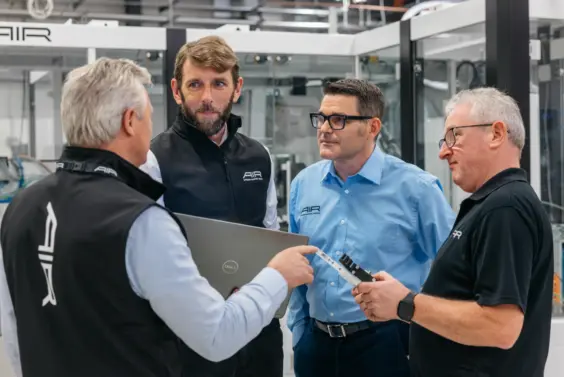
The conversation among manufacturers has moved on from, “should we automate?” to “how do we automate?” Darragh de Stonndún, CEO of Automated Industrial Robotics, says there’s a right and a wrong...
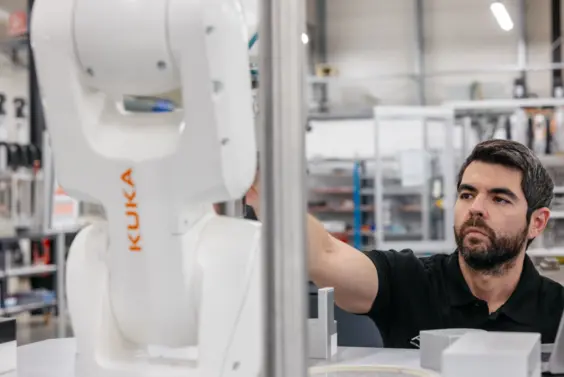
You might have heard of build-to-print manufacturing. Here’s a comprehensive guide on what it is, when to use it, and how it differs from build to spec.
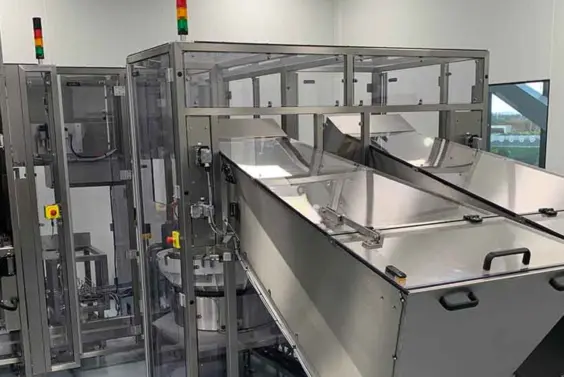
An innovative single-line platform to significantly reduce time-to-market for new medicines