How to outsource engineering design with a custom automation provider (with 8 examples)
Outsourcing engineering can be risky. You have a reputation to protect, and any solutions will have to fit into your existing systems. Here’s a guide to doing it the right way.
Why established manufacturers outsource engineering design
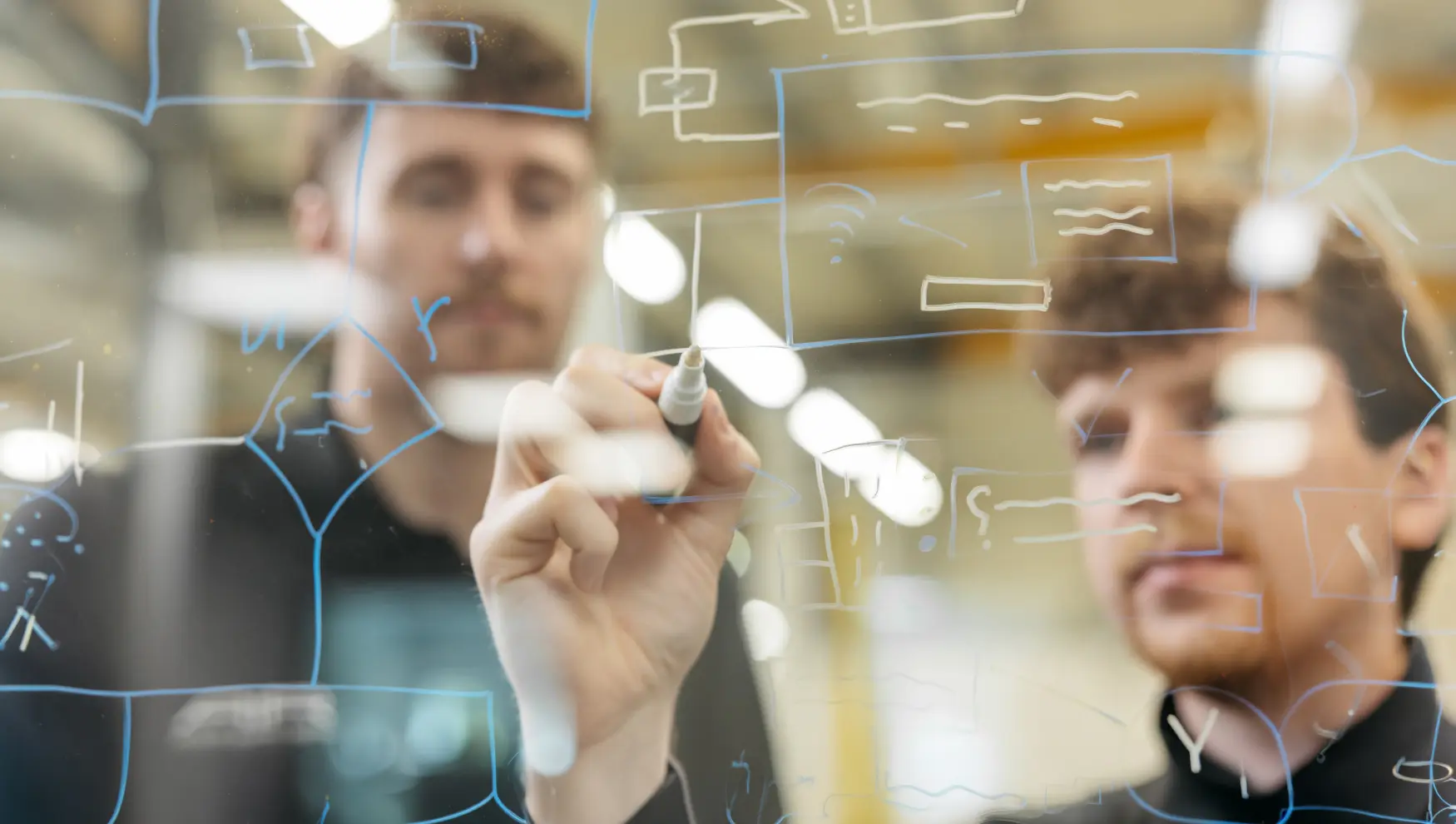
Some manufacturers find they have to outsource engineering design because they have the idea and domain expertise, but not the capacity to produce it. To get their product to market faster, they find a trusted engineering automation company like AIR, often forming profitable partnerships for years to come.
What engineering needs can you outsource?
You can outsource a range of engineering requirements, including:
- Product design
- Engineering
- Prototyping
- Software
- Firmware
- Contract manufacturing support
In this article, we discuss outsourcing the design and build of machines and products.
Which outsourcing partner do you need?
Many companies prefer a partner capable of delivering turnkey factory automation solutions, where design, engineering, build, testing, installation, and commissioning are managed through a single provider.
Before you search for an engineering company, you need to know exactly what you’re looking for. Usually this is one, or both, of two things:
- Design the product – a partner to take care of new product development (NPD), research and design (R&D), prototyping
- Design the machine to make the product – a custom automation partner
In general, you’ll find that potential partners fall into three categories:
| Type of partner | What they do | Best for | Example |
| Product development firms | Design, engineer and prototype the product itself | Early-stage product R&D, concept to prototype | Designing a new, smart wearable |
| Contract manufacturers | Build products from your specifications | Scaling production of a defined product | Stamping and assembling 50,000 electronics enclosures |
| Custom machine builders | Design and build production equipment, often in the form of special purpose machines tailored to specific manufacturing processes | New product lines needing custom automation equipment | A multi-access robotic cell to pack fragile food products |
At AIR, we mostly operate as a custom automation partner, partnering with OEMs and others, and building automated industrial robotics, automation machinery, and production systems to manufacture new products efficiently.
But we also act as contract engineers and product developers, helping with the design, prototyping, and engineering of a product – and will help you build a prototype based on your specifications.
Real-world examples of outsourced engineering design in action
To understand where your project fits, let’s take a look at how other OEMs use external engineering teams. Here are six common application examples of outsourced design and build:
1. Robotic palletizing and material handling cells
A manufacturer with an established packaging machine needs to add end-of-line automation. They outsource the design of a custom robotic cell that picks, stacks, and wraps finished products, integrating seamlessly with their legacy conveyor heights.
2. Multi-axis precision inspection systems
A medical technology provider needs 100% quality inspection for a high-volume part. They outsource the engineering of an automated system featuring multi-camera machine vision, custom lighting arrays, and pneumatic pass/fail sorting gates.
3. Automated dial indexer assembly lines
When a consumer goods manufacturer launches a new multi-part product, they outsource the design of a high-speed rotary dial indexing machine. The partner designs the precise mechanical synchronization required to press, snap, and ultrasonically weld components together in a five-second cycle time.
4. Automated precision dispensing stations
An automotive tier-one supplier needs to apply complex silicone gaskets to engine covers. They outsource the engineering design of a Cartesian coordinate robot setup that paths a dispensing nozzle dynamically based on the exact dimensions of each part.
5. High-volume functional leak-testing machines
For an industrial valve manufacturer, testing is a major bottleneck. They outsource the design of a custom leak-testing station that automatically clamps the product, pressurizes it with air or helium, monitors for micro-pressure drops, and stamps the product with a serialization code.
6. Hazardous environment material transfer lines
A chemical processing company needs to move volatile ingredients between process steps. Because their internal team lacks specific explosion-proof certifications, they outsource the mechanical and electrical engineering design to a specialist capable of building an ATEX-compliant automated conveyor system.
7. Laser processing systems for wafer manufacturing
A startup develops a laser processing system for wafer manufacturing. They have several process steps and know they could save on overall cost and complexity if they could develop a common platform that could support these multiple processes. They outsource the design of a common system platform that can be used for their various laser processes to leverage the cost savings and manufacturing flexibility that comes from commonality between systems.
8. X-Ray inspection system for semiconductor packaging
A semiconductor metrology company has a prototype process system. But they need assistance productizing it, including typical DfX improvements to the original design. Instead of spending time recruiting and hiring an internal engineering design team versed in equipment design, safety, manufacturability, and SEMI specs, their core engineering team can focus on developing the next generation of their technology.
What qualities to look for in a custom automation partner
When commissioning custom automation equipment, you’ll need a breadth of services to cover the many ‘handover points’ through the project lifecycle (each discipline that is subcontracted out).
But above technical capability, your partner should have a range of qualities and processes in place. Experience, mutual trust, and good collaboration are key to successful projects:
Ability to listen
A good partner will take the time to understand your production environment, existing systems, and constraints. Be wary of anyone who arrives with a standard approach and works backwards to fit your requirements.
A structured process for managing change
Requirements shift during any complex engineering project. Ask how scope changes are handled, how they’re documented, how cost implications are calculated, and at what point in the process changes become expensive.
Transparency on what they outsource
Ask which elements are designed and made in-house, and which are sourced from third parties. A credible partner will tell you without hesitation.
Clear IP and code ownership from day one
Who owns the CAD files, control code, and firmware at the end of the engagement? This should be defined in the contract before work starts, not negotiated after delivery.
Credible project references
How a partner handles problems is often more telling than how they handle smooth projects. Look for case studies and conversations with previous clients on similar projects, that detail challenges as well as successes.
What technical capabilities to look for in a custom automation partner
Your partner must be able to handle each of handover points capably, to make sure timelines are met and costs are kept to a minimum. Your partner should offer a range of automation services:
- Mechanical engineering
- Electrical engineering
- PLC and control systems
- Automated industrial robotics integration
- Fabrication and assembly
- Factory acceptance testing (FAT)
- Installation and commissioning
Checklist: what to ask a prospective custom automation partner
These questions can help you evaluate an automation partner’s qualities and capabilities, to ensure you make the right decision:
- Can you show products currently in production?
- Who owns all CAD, drawings, firmware, software, tooling, and IP?
- Can you support low-volume pilot production and full-scale manufacturing?
- What manufacturing processes do you perform in-house vs subcontract?
- What’s your process when requirements change mid-project?
- Can you provide design for manufacturing (DFM) reviews before tooling?
- What is the expected NRE cost?
- What does a typical OEM engagement cost?
- Can you support transfer to a contract manufacturer if our strategy requires it?
- Can we speak with two or three previous clients on comparable projects?
- Can you manufacture in the US (or other country) long-term?
How long do custom automation design and build projects take?
These projects typically run from nine months to two years, depending on complexity. If a partner says it will be significantly shorter than this, make sure they can give you a clear explanation of how they’ll achieve these targets.
Protecting your IP and design ownership
For OEMs, outsourcing engineering design means sharing proprietary information with an external party. This, of course presents a risk that will need to be managed.
Before exchanging technical documentation, your design-build partner should have:
- A mutual NDA that specifically covers the scope of information being shared
- Clear policies on how design files are stored, who can access them, and on what systems
- Defined contractual terms establishing that all designs, CAD files, control code, firmware, and tooling created for your project are your property
- A defined process for returning or destroying files if the relationship ends
It’s also worth asking whether the partner works with any of your competitors, and what their policy is on using learnings from one client engagement to benefit another. There’s no universally right answer, but you should know their position.
Non-recurring engineering (NRE) cost structures deserve particular attention. NRE is the one-off engineering investment required to develop a custom solution. This is distinct from the per-unit cost of the machines produced. Understanding how NRE is scoped, invoiced, and treated if the project changes scope is important before you commit.
When outsourcing your engineering design is the wrong call
There are times where keeping engineering design in-house is the better choice than outsourcing:
- The IP risk of external involvement outweighs the capacity benefit
- Your project is highly iterative, and research and engineering should collaborate more closely
- You have the in-house capability and the capacity, and the only driver is speed
- The project scope is too early-stage to brief properly — a partner needs a functional specification to work from, not an idea
The most productive outsourcing relationships happen when the customer has a clear brief, a defined outcome, and a genuine capability or capacity gap. If any of those conditions aren’t met, it’s worth pausing before engaging.
How AIR supports companies outsourcing their engineering design
AIR partners with you when you want to extend your bandwidth, providing turnkey factory automation services that cover design, prototyping, machine building, installation, and ongoing support. This is especially helpful when you need to accelerate development of ancillary or non-core products on your roadmap.
Our team follows a phased process to optimize trade-offs and reduce risk while designing and building prototype systems. AIR also provides volume manufacturing, including managing the design of customer specials and continuous improvement initiatives.
Companies partner with AIR to offset initial capacity constraints. Our upfront engineering is transparently structured as NRE costs, which often qualify for internal R&D tax incentives.
We can also help with the transfer to your contract manufacturer if your strategy calls for it.
Whether you need engineering expertise to design and build machines or product prototypes, AIR’s global, in-house engineers can help. Talk to us about your needs.
FAQs about outsourcing engineering design
Outsourced engineering design is when a company asks an external engineering partner to design — and often build — a product, machine, or piece of equipment for them. For example, for original equipment manufacturers (OEMs), this is usually the design and build of custom automation equipment: the machinery used to manufacture a new product at scale.
A contract manufacturer builds products to your existing specifications — you provide the design, they produce the parts or assemblies. A custom machine builder designs and builds the production equipment itself: the machines you use to make your product.
A special purpose machine is a piece of production equipment designed and built for a specific manufacturing task, rather than a standard off-the-shelf machine adapted to fit. Special purpose machines are used where standard automation equipment can’t meet the precision, throughput, or process requirements of a particular application.
IP protection starts before any technical information is exchanged. Ensure a mutual NDA is in place before a project starts, that the contract assigns all design outputs — CAD files, control code, firmware, tooling — to you, and that there are clear policies on how files are stored and what happens to them if the relationship ends.
NRE stands for non-recurring engineering: the one-off engineering cost required to design and develop a custom solution, as distinct from the per-unit cost of producing it at volume. NRE is typically incurred once per project and can often be structured as an R&D investment for accounting and tax purposes.
A full-service custom automation partner should have in-house capability across mechanical engineering, electrical engineering, PLC and control systems, fabrication and assembly, factory acceptance testing, and installation and commissioning. Gaps in any of these introduce subcontracting, which adds handover risk and can dilute accountability.
Most custom automation projects run from nine months to two years from initial brief to commissioned machine, depending on complexity, the number of disciplines involved, and whether any proof-of-concept work is required before full design begins. Projects that require novel mechanisms or untested process steps at the upper end of that range.
Partial outsourcing is possible — for example, engaging an external partner for controls design and programming while keeping mechanical design in-house. However, this requires careful management of the interfaces between disciplines and a clear protocol for how design decisions are coordinated. It works best when both teams have experience collaborating across organizational boundaries.
Automated industrial robotics systems combine robots, controls, sensors, and software to automate manufacturing processes. Manufacturers often use automated industrial robotics to improve throughput, consistency, and production flexibility.
Related news & insights
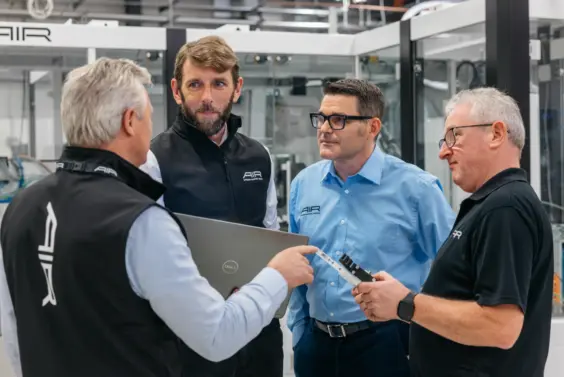
The conversation among manufacturers has moved on from, “should we automate?” to “how do we automate?” Darragh de Stonndún, CEO of Automated Industrial Robotics, says there’s a right and a wrong...
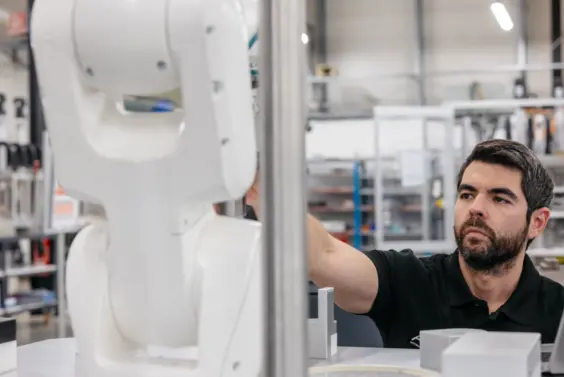
You might have heard of build-to-print manufacturing. Here’s a comprehensive guide on what it is, when to use it, and how it differs from build to spec.
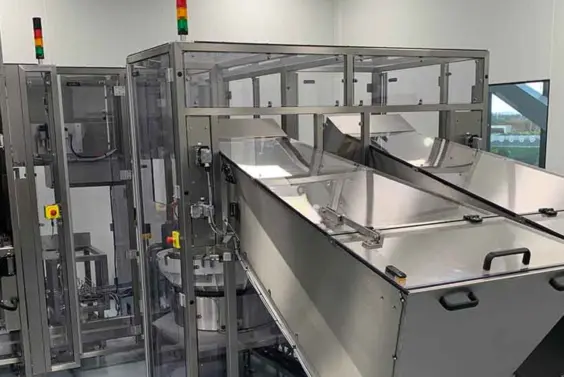
An innovative single-line platform to significantly reduce time-to-market for new medicines