How to Avoid 3 Engineering Mistakes When Facing a Downturn
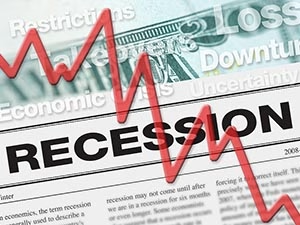
Do recent drumbeats sound familiar? You know the sound: when the news becomes more dismal, you hear of customers pushing out deliveries, and requisitions suddenly take much longer to be approved.
That’s the sound of a downturn on the horizon. Other than making sure your resume is polished, what should an engineering manager or project manager be doing to prepare?
Effective engineering managers understand where their company is in the current business cycle and prepare their teams to adapt to changing market demands. This blog discusses three critical steps to help engineering organizations get ready for—and make the best of—downturns:
1. Prepare for changes in the product roadmap
2. Organize for rapid engineering response
3. Develop an effective outsourcing strategy
Prepare for Changes in the Product Roadmap
The most common mistake many engineering managers make is ignoring the warning signs and blindly executing current plans. Management hasn’t told you anything has changed, so you continue to push your group, accelerate the schedule, flog suppliers, and focus relentlessly on the roadmap.
These managers are completely caught by surprise when the “official word” comes down that the industry has entered a downturn. It may take months for them to retool their groups and revise their plans to the new reality. Many engineering organizations are trained to valiantly fight all changes in the plan. Their emphasis is to focus resources on projects that have the greatest long-term benefits and minimize distractions by not engaging in customer specials. They are slow to recognize that when the industry enters a downturn, project priorities change rapidly and unpredictably.
During an upturn, organizations have the luxury of staying focused on the roadmap even at the cost of losing some sales to maximize long-term results. In a downturn, every revenue opportunity is critical. If a new feature is needed to close the sale, the priority on that new project skyrockets. The product roadmap is still important, but now short-term revenue opportunities have much greater weight.
Recognizing this shift early will save engineering managers endless struggles and confrontations with marketing, sales and the executive team. During a downturn, engineering must dedicate some portion of resources to “rapid response” to enable short-term sales objectives. Since funding is only approved if the sale is made, engineering must have a detailed implementation plan and stay in close contact with sales to determine when the program is likely to be funded. Establishing close communication with sales and marketing, and setting aside “rapid response” resources, should be done early in the downturn.
Organize for Rapid Engineering Response
The second mistake often made as the industry enters a downturn is not recognizing how the downturn will change schedule requirements. While the urgency of getting new products to market quickly in a downturn is reduced in general, the importance of rapid execution for particular projects increases. This is because management’s willingness to commit funds is inherently more conservative in a downturn. The market and opportunities are changing rapidly and management will delay committing funds until the last possible moment to minimize risk.
The impact on engineering is that the race is now a series of sprints rather than a marathon. Culturally, this can be a significant change to the engineering organization. Given that the race is a sprint, engineering must be able to start fast, implement quickly, and deliver flawlessly on these programs. There is no slack in the schedule but there are significant market penalties for delay. Some engineers are flexible enough to change speeds, but others will never be sprinters.
The important factor for engineering management to recognize is that the race changes in a downturn and the engineering manager needs to select team members that can adapt and make sure they understand the new race.
Develop an Effective Outsourcing Strategy
The third factor to recognize is that outsourcing is not a quick fix during downturns. A common misconception is that outsourcing can be used as “surge capacity.” Surge capacity means that the work is outsourced in times of high demand and then pulled back in-house during a downturn to keep the internal capacity loaded.
While this may be possible for simple tasks, it’s typically not practical for complex equipment. Outsourcing changes the task from doing to managing. This requires different work processes, people skills, and management structures to be implemented. Once this is done and working well, it’s not practical to reestablish the internal capacity.
In general, companies that engineer and manufacture complex capital equipment need to outsource high-level tasks with interdisciplinary content. The work is complex and requires special skills. Outsourcing should focus on resources that enhance internal capabilities and help capture revenue that would otherwise be out of reach. Outsourcing isn’t a short-term strategy that can be implemented just in time for a downturn. As an engineering manager, deciding which type of projects are suitable for collaborative development and establishing an organization capable of managing these is a long-term process that should begin well before the downturn comes.
How Owens Design Can Help
Operating in a downturn imposes unique challenges on any engineering organization. Acknowledging the macro forces and their impact on product roadmap priorities, the importance of engineering responsiveness, and an effective outsourcing strategy will allow you to be better prepared to adapt to challenging business cycles.
Speak to one of our design, engineering and manufacturing experts to explore how we can help you capture opportunities now and in the future.
Contact us to learn more about custom automation solutions
Related news & insights
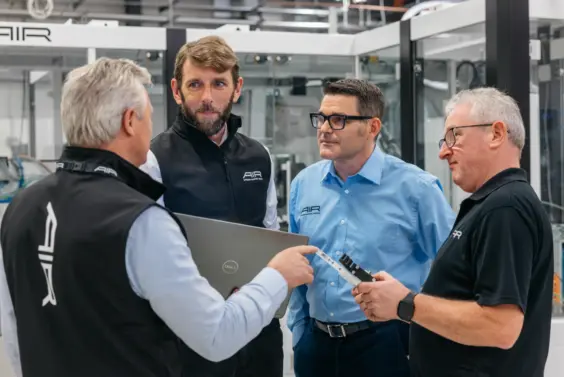
The conversation among manufacturers has moved on from, “should we automate?” to “how do we automate?” Darragh de Stonndún, CEO of Automated Industrial Robotics, says there’s a right and a wrong...
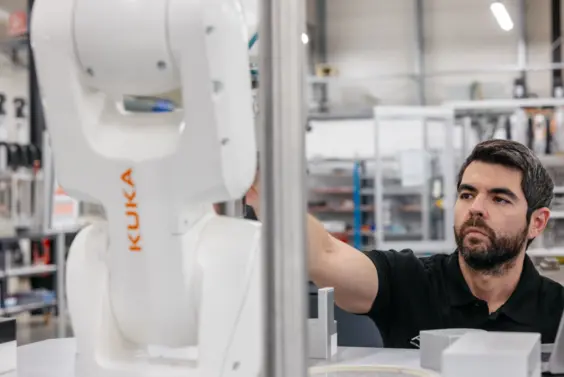
You might have heard of build-to-print manufacturing. Here’s a comprehensive guide on what it is, when to use it, and how it differs from build to spec.
An innovative single-line platform to significantly reduce time-to-market for new medicines