4 Reasons Custom OEM Automation Projects Fail
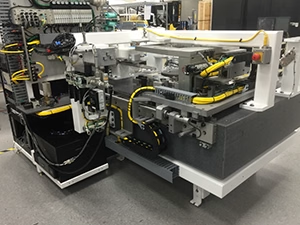
From managing projects in-house to changing product specs mid-stream, here are some common – and costly – mistakes that can derail OEM equipment design and build projects.
Original equipment manufacturers (OEMs) produce equipment for use in manufacturing facilities (e.g. semiconductor fabs for microchips). The design and build of this equipment is sometimes outsourced for strategic reasons. While the type and complexity of new OEM equipment design projects vary widely across industries, there are some common pitfalls.
Here are four scenarios that can doom an OEM design and build project to unnecessary complications and even failure.
1. Trying to Do It All In-House
Trying to handle your entire project in-house can be a costly mistake. For startup OEMs, it can be tempting to build out a team internally to “keep costs low.” This typically costs more, takes longer, and suffers from a lack of expertise outside the specialties of the in-house engineers.
Mature OEMs should consider outsourcing to allow their team to focus on their core products and increase their capacity without growing their staff. Outsourcing also frees you from the complexities of your organization and may inject new ideas to differentiate your product.
While most companies require multiple iterations, an experienced outsourcing partner can dramatically shorten the schedule and reduce cost by developing a shippable product the first time – this allows you to focus more on your internal IP.
2. Over Designing or Getting Caught Up in the Minutiae
Many internal engineering teams get caught up in the minutiae of the design process while losing sight of the goal. Beware of missing the (automation) forest for the trees.
While it’s imperative to ensure high quality in the details, it’s also critical to keep the big picture in mind. Spending too much time in the weeds can delay the progress and obscure the overall objective. Outsourcing the design and build process to an expert team of engineers frees up the OEM engineering team to work on higher value work.
3. Choosing the Wrong Partner for the Project
Some Integrators and engineering design firms each play an important role, depending on your project’s objectives, system-level design and complexity. If the goal is to connect existing equipment and make interfaces work, an integrator may be the right choice. However, developing highly customized capital equipment requires a different level of expertise.
Rather than focusing on individual components or interfaces, an engineering design firm evaluates the system as a whole, balancing engineering trade-offs to create the best overall solution. This system-level approach helps improve performance, reduce technical risk, and optimize the product for long-term commercial success.
Selecting a partner whose capabilities align with your project’s needs helps ensure you achieve the best technical and business outcome while allowing your internal team to remain focused on the technologies that differentiate your product.
Utilizing the wrong partner can lead to a product that falls short of expectations.
4. Changing the Product Definition Mid-Stream
It can be tempting to make major changes to your equipment project when a significant new customer emerges with a request for something a little different. It’s a common mistake that can delay time-to-market and lead to an excessively costly product. These requests are best addressed in post-launch/ongoing development.
Utilize Expert Design & Build Knowledge with a Design & Build Partner
Designing and building successful OEM equipment requires careful planning, collaboration and expertise. By avoiding these common mistakes, OEMs ensure that their project is completed on time, within budget, and with high-quality, high-value results.
Collaboration with experienced design and build experts enables OEMs to focus on what they do best. The right partner will have experience in your industry, be well versed in market trends, and have a clear strategy for keeping your project from getting stalled in the valley of death.
At Owens Design, every member of our engineering team is deeply experienced in design build projects – having completed as many as 40 of them over a decade of collaboration with OEMs across industries, including laser, semiconductor, emerging technologies, and many others. Speak to one of our OEM equipment experts to learn more about avoiding the common pitfalls of design and build projects.
Contact us to learn more about custom automation solutions

Related news & insights
The conversation among manufacturers has moved on from, “should we automate?” to “how do we automate?” Darragh de Stonndún, CEO of Automated Industrial Robotics, says there’s a right and a wrong...
You might have heard of build-to-print manufacturing. Here’s a comprehensive guide on what it is, when to use it, and how it differs from build to spec.
An innovative single-line platform to significantly reduce time-to-market for new medicines