CIGS carrier transfer automation reliability enhanced by 50×
Project snapshot
Client:
Location:
Sector:
Product type:
Challenge
Resolve critical reliability issues in carrier transfer systems to meet manufacturing ramp targets
A leading thin film solar photovoltaic startup was experiencing machine jams, damaged carriers, and yield loss on multiple carrier transfer systems used across their production line. Transferring 48 tubes of glass between carriers required precise registration and alignment while accommodating variations in temperature, product, and carrier tolerances. Complicating matters, the carrier design itself was being updated to improve yield. With tight schedule pressure, a rapid and effective solution was critical to avoid impacting the client’s manufacturing ramp.
Innovation
Collaborative redesign of mechanisms and carrier interface to improve reliability
We worked closely with the client to identify and resolve thermal, mechanical, and alignment issues affecting the transfer systems. Key steps included:
- Redesigning critical mechanisms over several design cycles aligned with planned line upgrades.
- Modifying carrier designs to improve alignment references and reduce failure risk.
- Conducting extensive operator and maintenance training to support consistent calibration and performance.
- Implementing a system-level approach to ensure consistent operation across multiple line locations.
Result
System reliability increased 50x, enabling consistent manufacturing throughput
The redesigned transfer systems dramatically improved reliability, minimizing jams, damaged carriers, and yield loss. The client was able to meet their manufacturing ramp targets and maintain high throughput across multiple line locations.
Featured capabilities:
Featured sectors:
Case studies
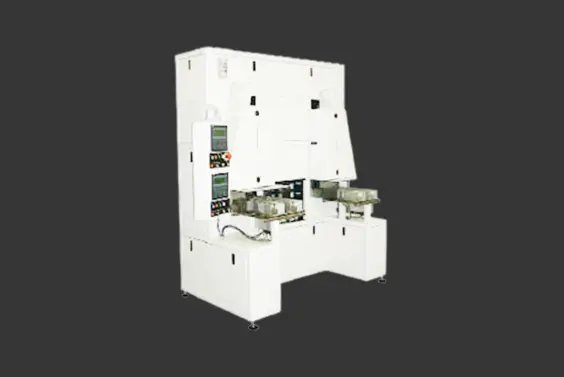
A major hard disk manufacturer had developed a lab-scale UV processing technology and needed to scale it to high-volume production. The system had to handle media at high speed, integrate seamlessly with…
The client needed to scale up the back end of their thin film PV cell processing line with full automation. The process required flattening the curved cells from the original roll, electrically testing…
The furnace OEM needed to meet a customer demand for higher throughput and lower cost of ownership by automating the quartz boat load/unload process. The project required completion in just 14 weeks. Integration…