Worker shortages & automation: an interview with Mark Atkins
It’s fair to say that engineering and manufacturing have suffered somewhat of a skills gap in recent years that we’ve been working hard as an industry to close. In 2022, we’re also feeling the weight of a worker shortage as unemployment falls to its lowest level in 50 years resulting in companies battling it out to secure employees.
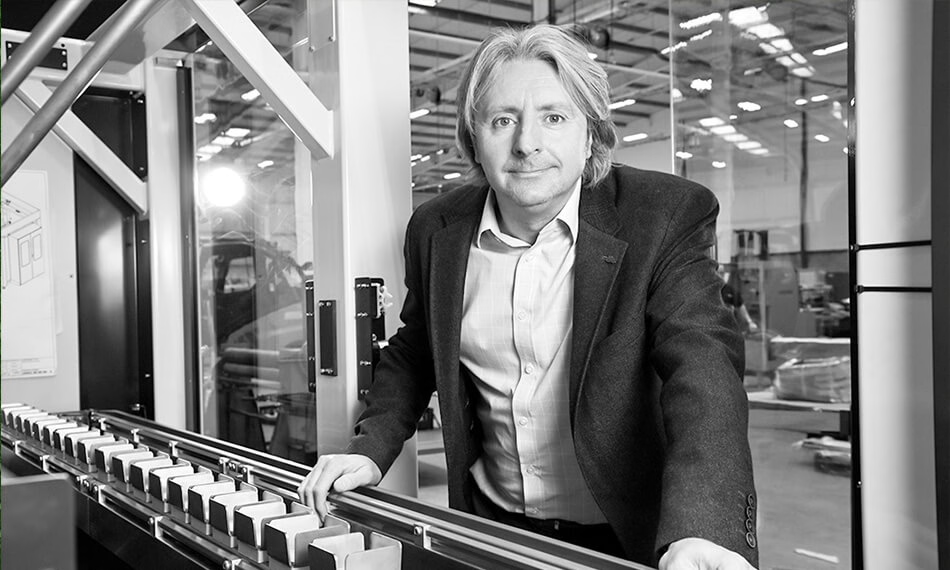
To explore this topic further, we chatted to our Business Support Director Mark Atkins to discuss what has caused this shortage and what the manufacturing industry can do to tackle it.
What are the driving factors behind the worker shortage that the industry and the UK as a whole are currently facing?
There are a few different things that are contributing to the current situation. Firstly, the ageing population of baby boomers across the globe are reaching retirement age. This generation has made up a large part of the manufacturing workforce for many years. As they leave, more job roles are being left open with fewer people to fill them as many young people aren’t turning to manufacturing and engineering as a desired career option.
Secondly, the pandemic and Brexit are part of the problem. Both of these factors have caused the immigrant and seasonal workforce supply to basically stall.
How is this worker shortage affecting our industry?
Internally, the worker shortage has the potential to cause many issues for businesses. With fewer people on the job, current workforces are becoming stretched – and a stretched workforce can quickly become an unhappy workforce. Staff may feel that they need to work longer hours to get the job done, which can lead to disengagement in the long run.
This is obviously not good news for those working with manufacturing and engineering firms. The worker shortage may mean that companies are unable to fulfil work commitments to clients and customers.
What can companies do to navigate the worker shortages?
It’s something that our industry and particularly Sewtec has been focused on for years now – education. We continuously work with schools, colleges and universities to bring awareness to young people about the opportunities that our industry can hold. Unfortunately, manufacturing and engineering has been perceived as ‘dirty and old-fashioned’ in recent years – but that’s just not the case.
Engineering firms need to work on educating and encouraging young people into our industry. Almost everything you can see around you started out in engineering and the UK boasts some of the best engineers in the world. Young people need to learn about and experience the amazing things that we create and where a career in engineering could potentially take them.
Investing in automation is also a game-changer when it comes to tackling worker shortages. We’d go as far as to say that automation is now a necessity rather than an investment opportunity. This is something that we at Sewtec are witnessing firsthand. In the last twelve months alone, we’ve seen inquiries for automation rise by over 50%, with orders coming from various sectors both in the UK and across the globe.
How can automation help?
In a nutshell, automation reduces the reliance on human workers. That’s certainly not to say that automation is replacing jobs, however. It instead offers the opportunity to upskill workers and give them new skills in automation and technology. It also allows workers to spend less time on repetitive manual tasks and more time on value-adding tasks that will aid their personal development along with business objectives.
Not only that, but automation can provide a higher level of service for certain processes. With automation, products can be picked and packed uniformly and mistakes and variances between products can be minimised. This can be a disadvantage when tasks are performed manually, with human error fairly commonplace.
Alongside this, production can often be disrupted when workers are off sick, feeling tired or overworked or simply on annual leave. Automation doesn’t have downtime unless something needs repairing, so offers more predictability and a more stable and consistent approach.
Automation can also reduce the time it takes to perform tasks and the requirement for employees to carry out the same operation. It allows businesses to readily identify inefficiency points and delays which can then be corrected immediately. It also provides a business with an opportunity to introduce precision complex processes into their operations.
Is your company feeling the effects of the worker shortage and thinking about how automation could help you? At Sewtec, we’re global leaders in automation and have helped hundreds of businesses around the world transform their workforce and output with automation.
Contact us today and let’s talk about your needs and requirements.

Related news & insights

Discover how automation is revolutionising pet food packaging. Learn how AIR supports UK manufacturers with advanced packaging solutions.
Automated Industrial Robotics Inc. (“AIR” or the “Company”) is pleased to announce the acquisition of KAON Automation (“KAON”), an Ireland-based industrial automation company that delivers...

Discover how sustainable automation reduces carbon footprints in pharma manufacturing. Explore how AIR’s PACE system is a market leader.