How sustainable automation supports carbon footprint reduction in manufacturing

As the world sharpens its focus on carbon footprint reduction, industries around the world are under growing pressure to make changes. That’s no different in pharmaceutical manufacturing. Sustainable automation plays a critical role in reducing the carbon footprint of pharmaceutical manufacturing.
Sustainable manufacturing processes are key in today’s drive for net-zero. Manufacturers can improve efficiency and drastically reduce waste by using intelligent, data-driven technologies to streamline various processes. This then helps reduce emissions and improve the manufacturer’s carbon footprint. But how does that happen?
This article will highlight how automated systems improve energy efficiency, minimise material waste, and optimise production to eliminate unnecessary emissions. We’ll examine key areas that contribute to measurable CO2 reductions. We’ll also showcase the PACE system as a real-world example of supporting sustainability goals, enhancing operational performance, and improving regulatory compliance.
The role of automation in reducing carbon footprint
Using traditional methods, pharmaceutical manufacturing was unsustainable. As is the case today, the industry must meet strict regulatory requirements to ensure that medicines and vaccines remain safe at the point of use. Following the correct procedures led to a larger carbon footprint. Key drivers in this included:
- Overproduction:Using traditional systems, manufacturers needed to stockpile products in case demand increased. When demand didn’t increase, the products went to waste.
- Waste: High waste meant unnecessary use of raw materials, energy, and packaging. All of which needlessly contributed to a large carbon footprint. In addition, an energy-intensive disposal process took place.
- Manual intervention: Manual intervention across critical manufacturing stages created inconsistencies that could lead to errors in filling, labelling, or data entry. These mistakes often resulted in rejected batches or rework, both of which consumed additional energy and materials.
- Lack of information: There was no live data on the manufacturing process, making it difficult to identify errors in batches. This meant entire batches had to be reproduced, consuming additional energy and materials.
As a result of this, the manufacturing carbon footprint was too high, and the need for sustainable manufacturing processes became apparent to enable carbon footprint reduction.
Energy efficiency
Energy use itself has been a major contributor to carbon emissions in the pharmaceutical manufacturing industry. Packaging systems and other process-related equipment require high power.
The modern, environmentally friendly manufacturing systems are generally designed and built with energy efficiency in mind. In addition to general efficiency updates that are seen everywhere in modern technology, automated systems use intelligent sensors and predictive maintenance tools that reduce unnecessary machine runtime and prevent inefficient operation.

For example, our PACE system uses advanced camera and sensor technology to validate every stage of the packing process. This ensures error-free batch production. By drastically reducing the number of mistakes, it eliminates the need to reproduce entire batches of pharmaceutical products. This, in turn, conserves energy during the process.
Minimising material waste through on-demand production
The reduction in mistakes due to advanced camera and sensor technology conserves raw materials and saves energy. Automation also offers better material control.
Automation is built to support a true make-to-order supply model. Instead of building up bulk stock that often goes to waste, modern systems can be much more efficient. Through Interactive Response Technology (IRT), investigators can request resupply. This triggers automated systems, such as PACE, to schedule, fill, and label each batch in-line all within hours. It is even possible to run the entire process for one single bottle.
This removes the need to overproduce and store bulk stock in case of an emergency. This significantly reduces waste, enabling carbon footprint reduction in the pharmaceutical industry.
Data-led decision making
With real-time insights into every stage of production, manufacturers can pinpoint inefficiencies and make evidence-based improvements.
Automated systems highlight energy-intensive processes, production delays, or material waste, allowing operators to make immediate adjustments. Over time, this data-driven approach drives optimisation across the facility.
As AI and machine-learning tools continue to advance, manufacturers will gain greater predictive insight. This enables demand forecasting, smarter resource deployment, and reduced emissions. By adopting a data-centric approach, pharmaceutical companies can make sustainable manufacturing processes a measurable part of day-to-day performance.
Real-world Example: PACE System
The PACE system (Pharmacy Automation for Clinical Efficiency) has been developed for pharmaceutical supply chains and has a proven track record of enabling sustainable automation by reducing carbon footprints.
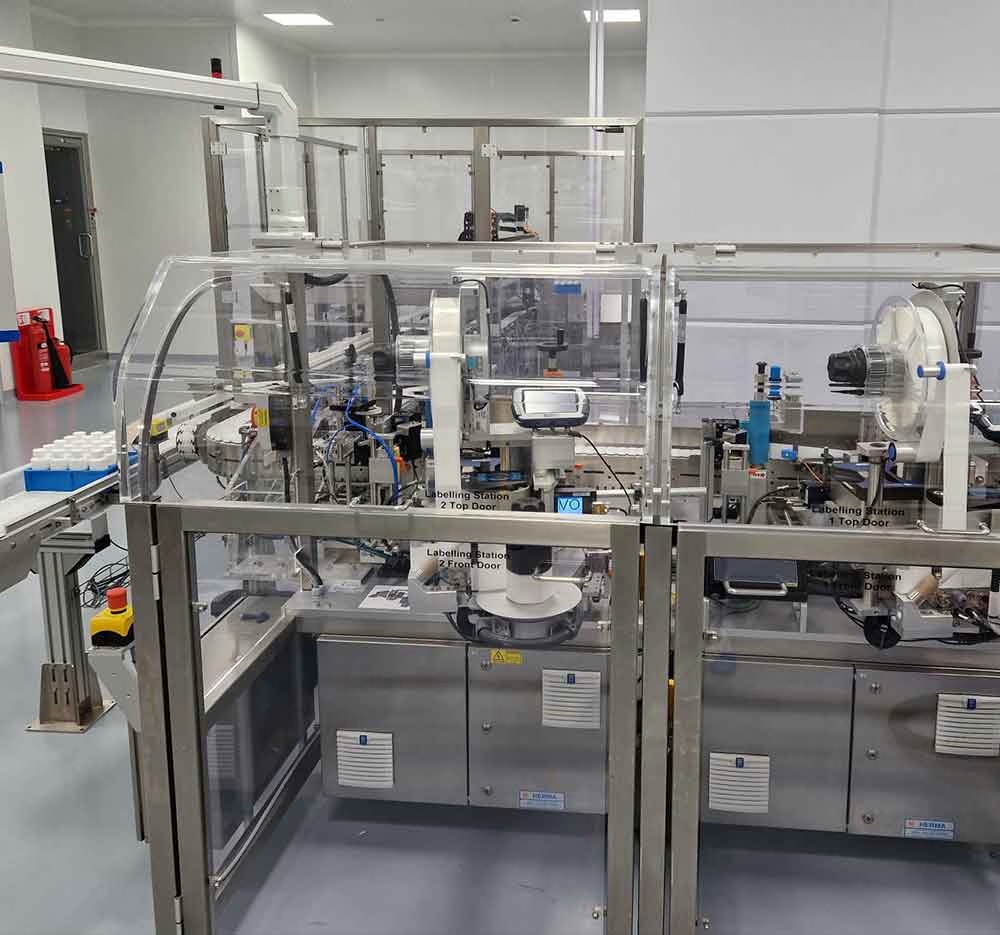
PACE can cover the entire process. This includes production, packaging, and labelling of multiple drugs in a single facility. Operating on one line in a GMP environment with real-time quality checks, PACE can reduce manufacturing carbon footprint and is a market leader in environmentally friendly manufacturing for the pharmaceutical industry.
From a sustainability perspective, PACE helps to:
- Reduce waste: Precision filling and labelling minimise material loss and rework.
- Save energy: Better machine utilisation and faster changeovers reduce idle time, lowering energy consumption.
- Lower emissions: Flexible on-demand production reduces excess stock, storage issues, and transportation and packaging emissions.
- Enhance compliance: Digital traceability and small-batch capability support regulatory compliance while enabling more efficient, sustainable automation.
Read the PACE case study to discover all the benefits of the system.
The wider impact of automation
The shift towards sustainable automation helps pharmaceutical manufacturers tick many boxes, including regulatory obligations. But it’s more than just a tick in the box. It’s about creating a model that is built for the future. A model that is efficient, resilient, and responsible.
Pharmaceutical companies that adopt the PACE system align with Net Zero goals because they have sustainable manufacturing processes. The technology helps reduce waste, optimise energy use, and reduce the carbon footprint without reducing productivity or product quality.
By having sustainable automation, manufacturers can create a process that meets both business and sustainability expectations. In short, sustainable automation is no longer just a tool for efficiency; it is a driver of meaningful carbon footprint reduction, sustainable manufacturing processes, and truly environmentally friendly manufacturing.
Discover how our PACE system and bespoke automation technologies can help you reach your sustainability goals. Get in touch with our experts today.

Related news & insights

Discover how automation is revolutionising pet food packaging. Learn how AIR supports UK manufacturers with advanced packaging solutions.

Automated Industrial Robotics Inc. (“AIR” or the “Company”) is pleased to announce the acquisition of KAON Automation (“KAON”), an Ireland-based industrial automation company that delivers...

The AIR team was proud to attend Medical Technology Ireland in Galway — one of Europe’s premier events for innovation in medical device design, manufacturing, and automation. Ireland continues to lead...