Precision alignment enables next-generation tablet display assembly
Project snapshot
Client:
Location:
Sector:
Product type:
Challenge
Achieve sub-20-micron display alignment at production scale
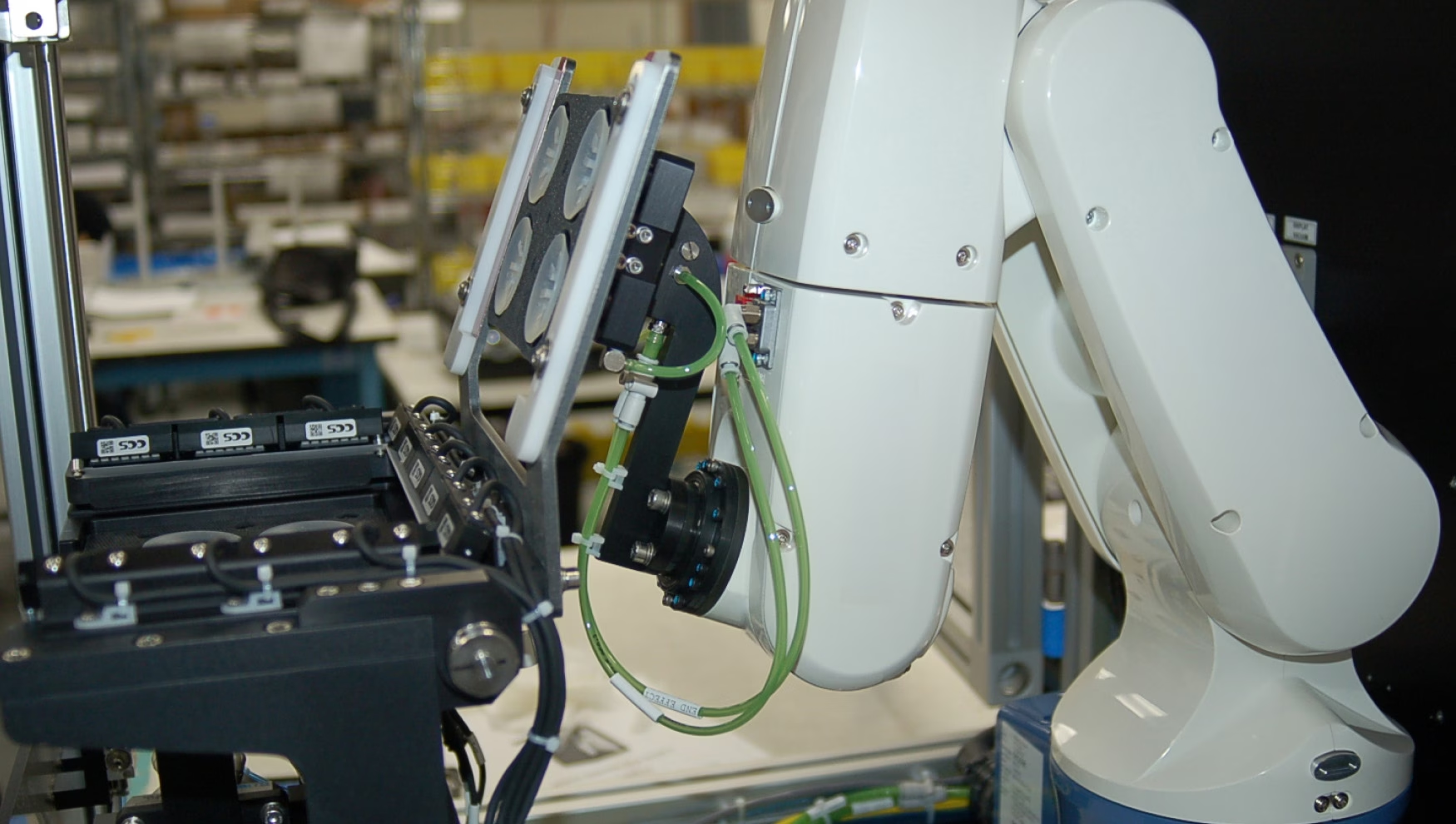
A next-generation tablet design required extremely precise alignment of the display to the back housing, a task the contract manufacturer was unable to solve with a passive alignment fixture. The process required feeding multiple connectors through a mid-plate, bonding with pressure-sensitive adhesive, and verifying final gap alignment—all while holding tolerances below 20 microns.
Innovation
Active alignment using machine vision and robotic assembly
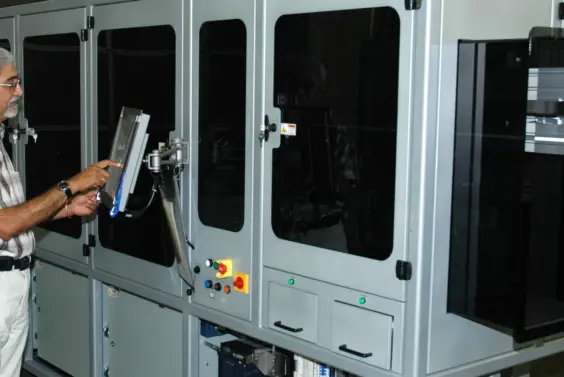
We developed an automated workcell that replaced passive fixturing with an active alignment approach capable of consistently meeting tight tolerances.
Key elements of the solution included:
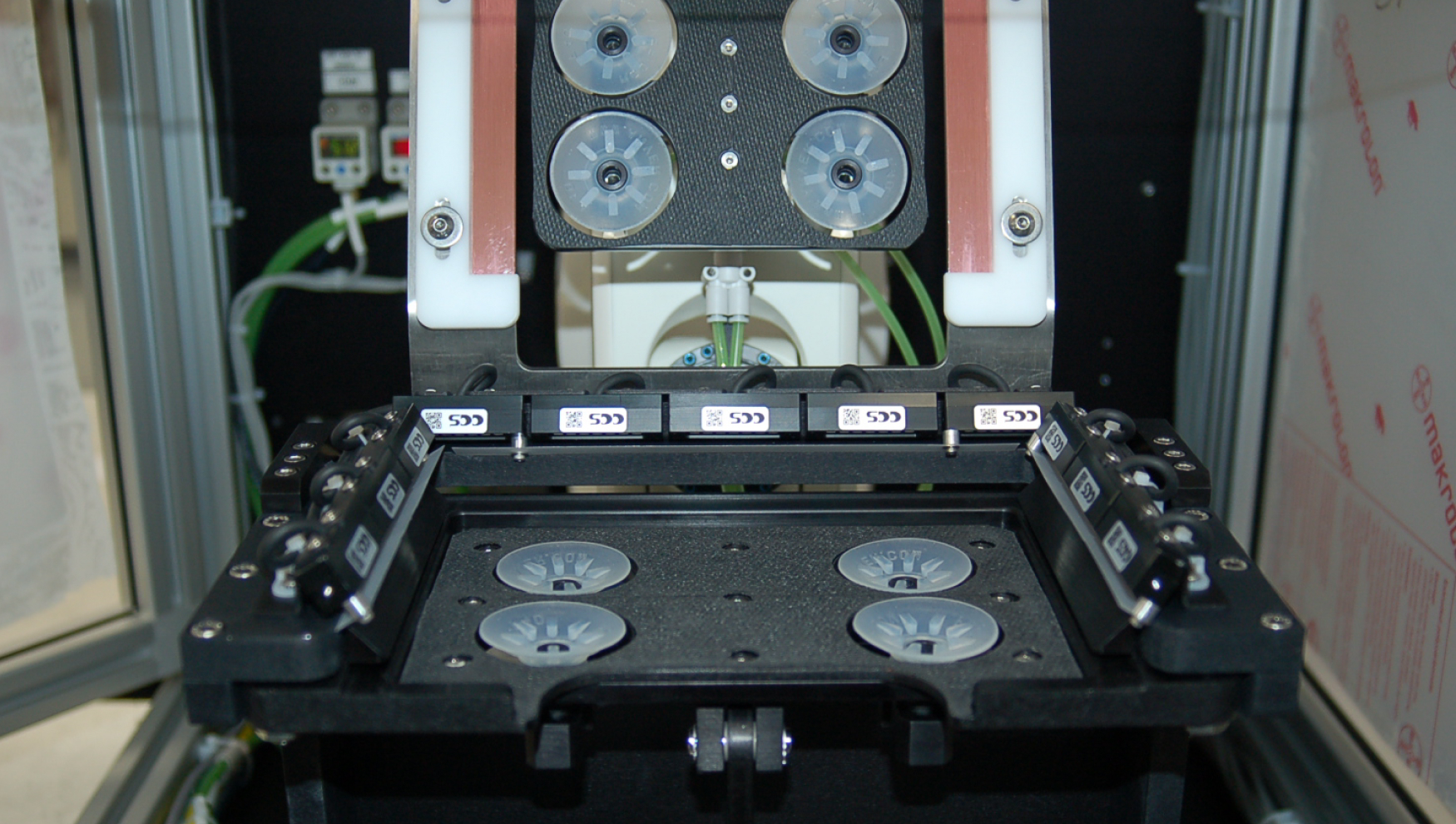
- An active alignment strategy to repeatedly achieve sub-20-micron display-to-housing alignment.
- Machine vision for precise measurement and real-time alignment control.
- An innovative clamshell mechanism combined with a compact robot to manage alignment and assembly.
- Integration of pressure-sensitive adhesive bonding within the automated process.
- In-process gap measurement to verify final assembly quality.
- A flexible workcell design adaptable to multiple tablet form factors, extending the value of the manufacturing investment across future product generations.
Result
Reliable high-precision assembly with future-proof flexibility
The automated alignment station enabled consistent, production-ready assembly of the tablet display while providing a flexible platform that could be reused across future product designs.
Featured capabilities:
Featured sectors:
Case studies
Assembly of a critical module required components to be aligned to micron-level precision relative to a reference axis. The surfaces were difficult to image, and in-process quality control (IPQC) was complicated…
A battery manufacturing startup needed to rapidly increase manufacturing capacity to support customer sample ramp-up. A laser ablation process for a critical layer in the battery stack had been proven…
The fragile PV cells required high-speed handling, inspection, and precise placement into custom carriers. Vision systems were needed at both input and output to detect defects and provide positional feedback….