Automated Marangoni drying for high-volume HDD media
Project snapshot
Client:
Location:
Sector:
Product type:
Challenge
Automate a delicate, patent-protected drying process for high-volume production
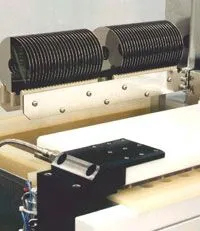
The final drying step in HDD media manufacturing used a patented Marangoni process, which requires passing disks through an IPA-based drying interface. Automating this step demanded precise batch handling to meet cost-per-disk targets, ensure minimal contamination, and navigate complex IP and licensing considerations.
Innovation
Patented handling and ultra-clean automation for consistent drying
We delivered a fully automated solution that integrated the Marangoni process into production-ready tooling. Key elements included:
- Licensing the Marangoni technology from the leading IP holder to enable commercial implementation.
- Innovative disk handling mechanism using high-precision dual servo leadscrews to pass disks through the IPA interface accurately.
- Cassetteless batch processing of 50 disks to minimize contamination.
- Integration of ultra-clean process fluids and gases (Nitrogen, IPA, DI water) through precision components.
- Complete automation of disk transfer from wet to dry tooling with precise timing to maintain process integrity.
Result
Reliable, high-throughput, contamination-free drying
The automated system successfully incorporated the Marangoni drying process into high-volume production, delivering low particle contamination, repeatable results, and cost-effective batch handling.
Featured capabilities:
Featured sectors:
Case studies
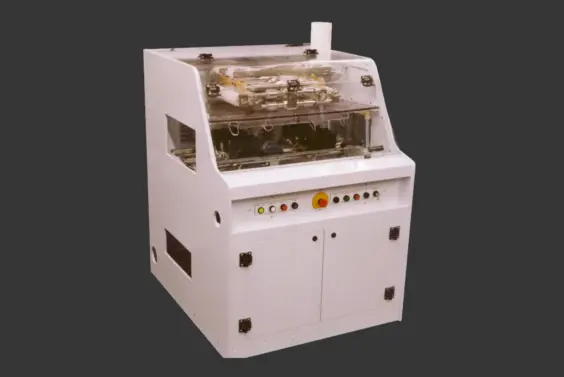
A major HDD manufacturer needed to improve the reliability and cleanliness of their media scrubber modules without replacing the entire cleanline. Existing automation dropped disks frequently, had low…
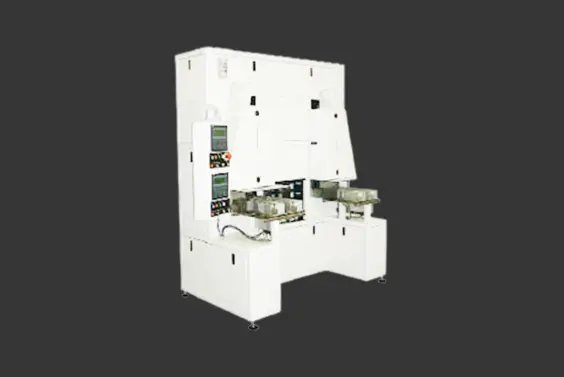
A major hard disk manufacturer had developed a lab-scale UV processing technology and needed to scale it to high-volume production. The system had to handle media at high speed, integrate seamlessly with…
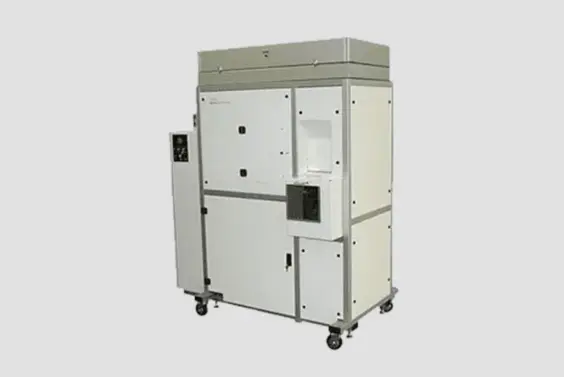
Candela Instruments had proven their optical surface scanning technology on a manually loaded machine, but expanding to full production required a fully automated, in-line system. The automation had to…